The Visual Journal as a Therapeutic Tool: What the Research Actually Says

The Visual Journal as a Therapeutic Tool: What the Research Actually Says
The Visual Journal as a Therapeutic Tool: What the Research Actually Says

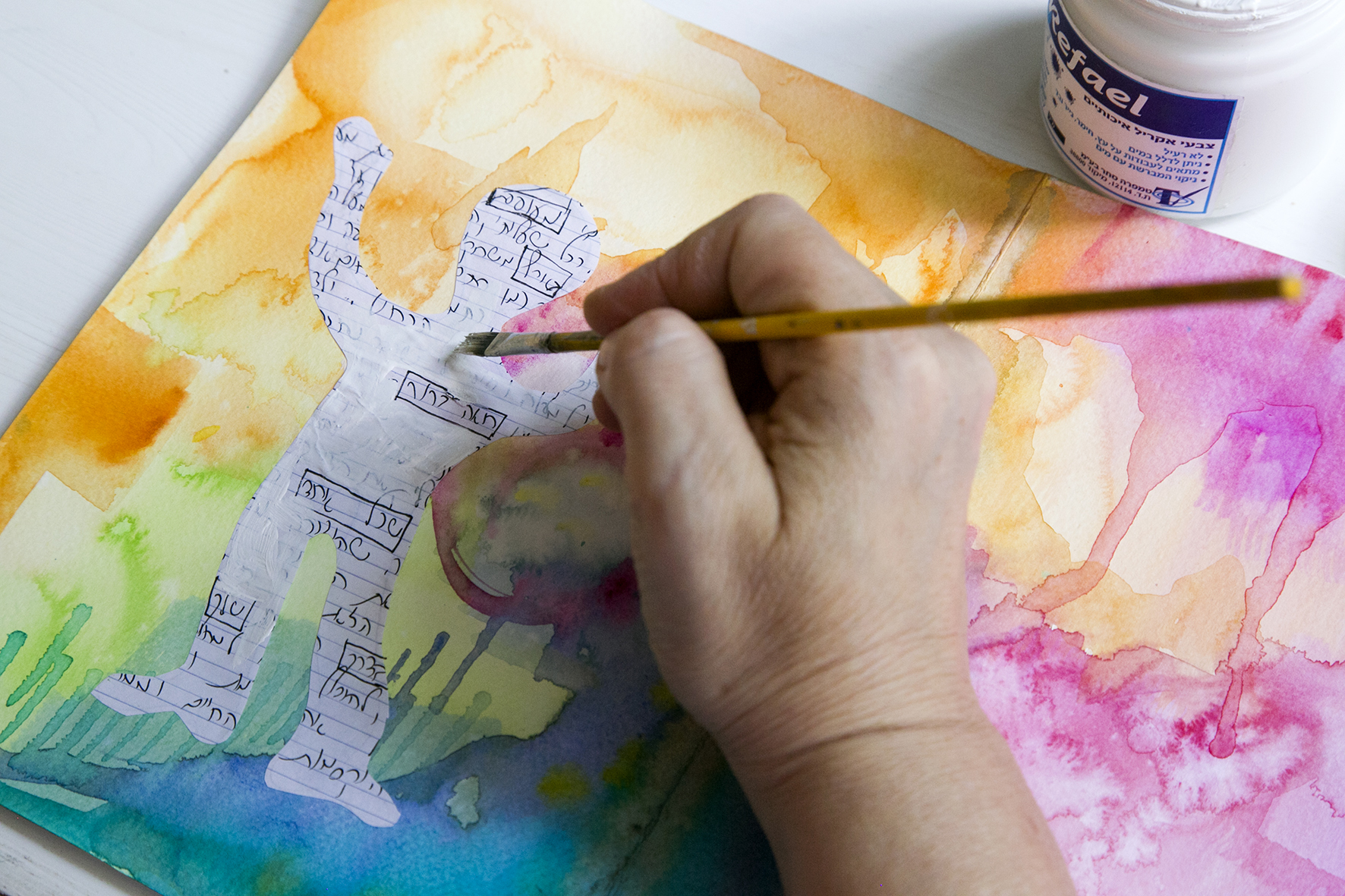
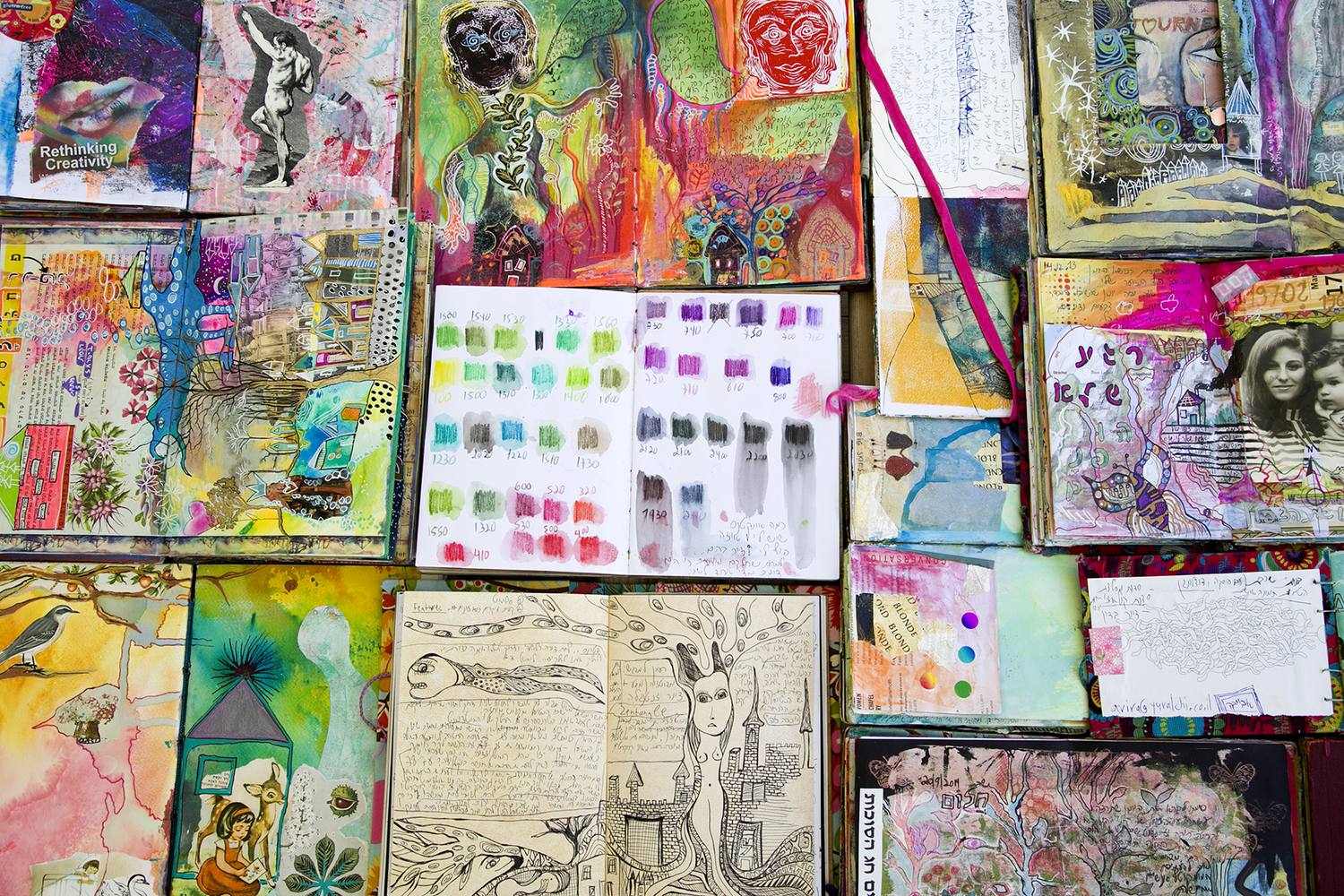
A visual journal used therapeutically is a single continuous book in which a person works in mixed media, guided by a therapist who teaches both art techniques and guided-imagery techniques. The journal gathers meaning across the whole course of therapy, becomes a transitional object the client takes home, and allows symbolic expression that never forces her to name in words what she has no words for yet.

I first set this out in an academic paper published in 2016 in Bein HaMilim (Between the Words), the peer journal of Kibbutzim College of Education in Tel Aviv, under my earlier name, Rakefet Link-Skop: Internal Journey Journaling: The Visual Journal as a Therapeutic Tool. That paper is the theoretical ground the SoulPages method grew out of, and what follows is the paper in plain English, with a link to the original at the end. The rest of the publications and press are gathered on the publications page.

My name is Rakefet Hadar. I am an art therapist, an author, and the founder of the training school for SoulPages guides. I began my own visual journal in 2014, the year my mother was dying of cancer and I was working as an art therapist who gave all day and came home in the evening with nothing left. I was looking for somewhere to be the one receiving for once, and I found it between the pages of a book I sewed myself.

How is a therapeutic visual journal different from ordinary art therapy?

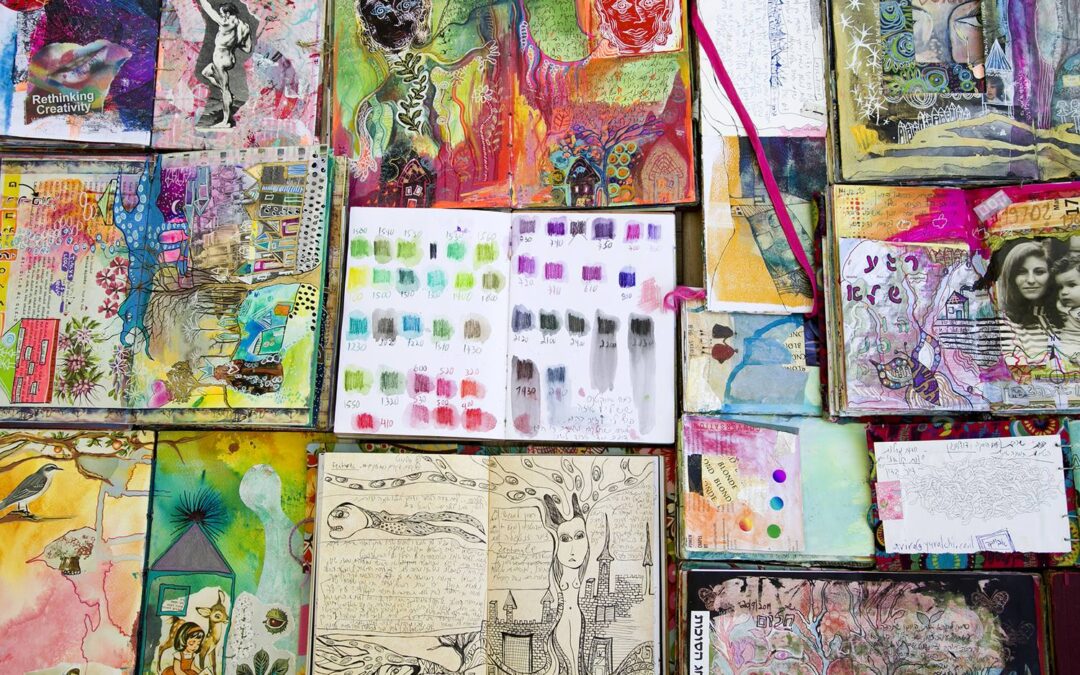
The difference begins with the surface you work on. In classic art therapy the work accumulates in a box or a folder and stays in the therapy room, and towards the end of the process it is reviewed, sorted, and sometimes partly discarded. In a visual journal everything lives in one place, in the order it happened, and it travels home with the client after every session.

That looks like a technical detail, and in practice it changes three things at once:

  • Narrative. Page after page builds a personal story you can turn back through, and inside it you can see movement the client herself could not feel while it was happening.
  • Continuity. The work does not stop when the door closes. She carries on at home, and the bridge between what surfaced in the room and the life waiting outside it gets built on the page rather than left to memory.
  • An object that remains. What is left at the end is not a scattered pile of paper but a book, and that book has weight in the hand.

In the paper I called the approach Internal Journey Journaling (IJJ), and I presented it through five foundations.

Why is the method called SoulPages today and not Internal Journey Journaling?

The name changed; the method did not. In 2016, when the paper was written, it was called Internal Journey Journaling, and that is the name used throughout it. In the years that followed, as I began training guides and taking the work beyond the therapy room, it took the name it carries now: SoulPages, and in Hebrew shitat “dapei nefesh”.

The newer name is the more accurate one, because it describes what actually gets made, a page that is a soul. Anyone who meets both names in two different places is meeting the same method and the same five foundations.

What are the five foundations of the method?

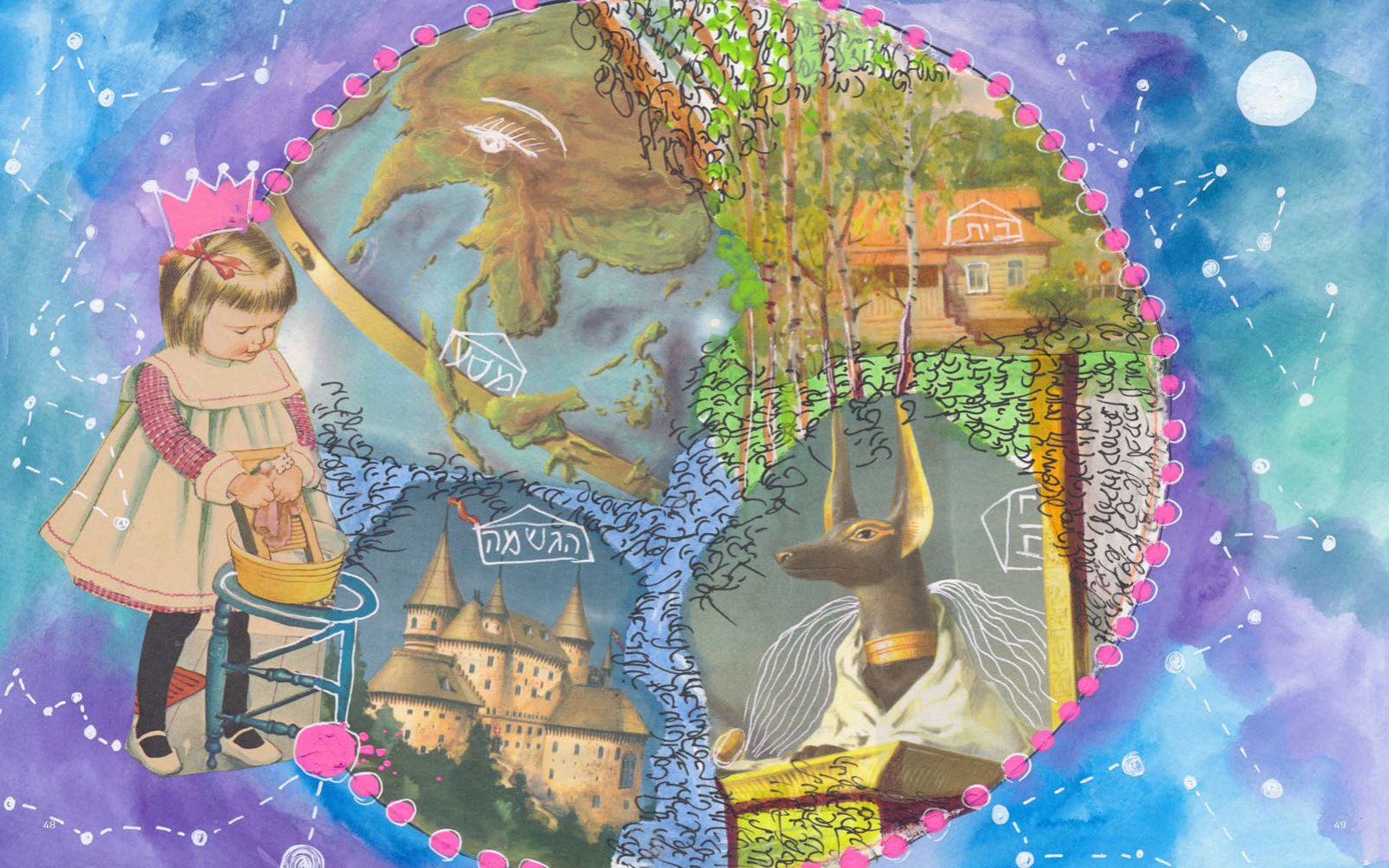
  1. The frame. Continuous work inside a book, usually one the client sews by hand at the start. The book is an ancient and loaded symbol, and when a woman chooses the size of the pages, the texture of the paper and the thread she binds them with, every hope she holds for the process is already inside it before a single mark is made.
  2. The content: parts of the psyche. Before the making there is inner work through guided imagery or dialogue with an inner part, and afterwards that material is translated into colour and image. One of the techniques I draw on is Voice Dialogue, developed by the Jungian psychologist Hal Stone and Sidra Stone, in which inner voices take on a figure you can hold an actual conversation with.
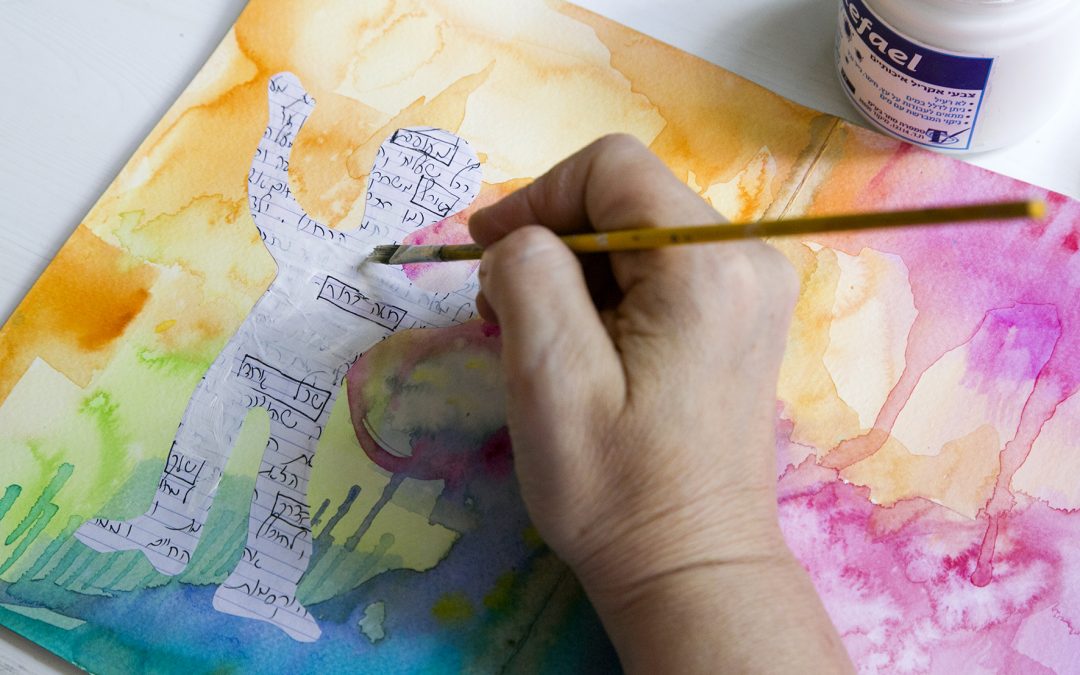
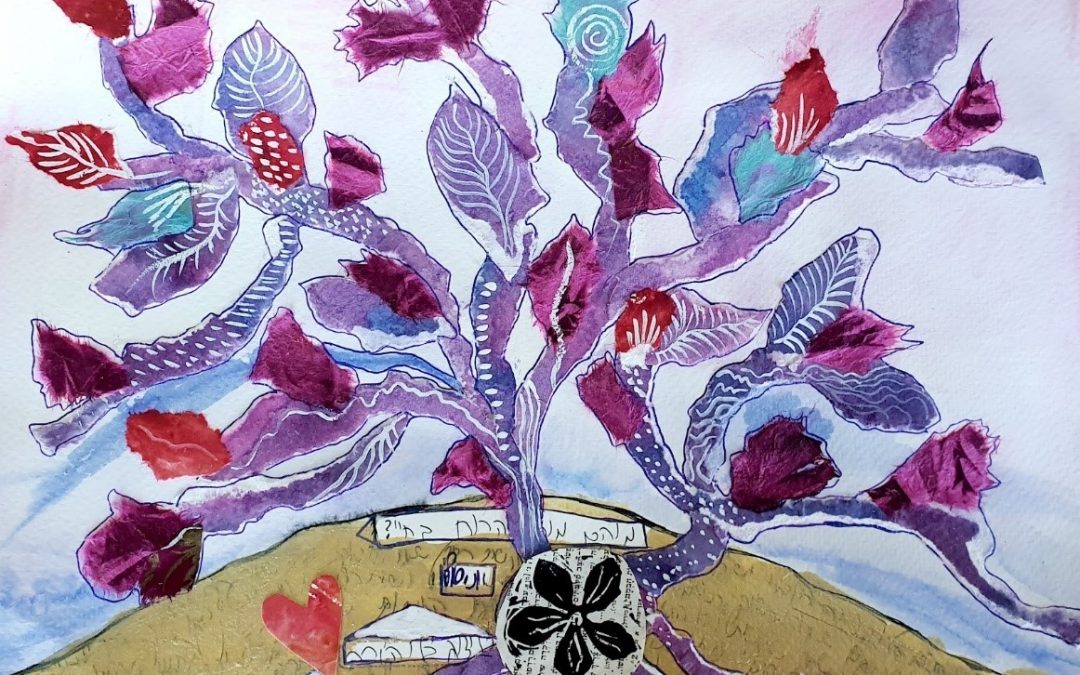
  3. A wide range of techniques and materials. The mixed-media language, in which a single piece is built from layers of different materials: monoprints, spattering, collage, watercolour, acrylic and simple mark-making. Those layers imitate the structure of the psyche, where there is always one layer showing through from beneath another.
  4. Extended session time. Fifty minutes is not enough. A session in this method runs at least an hour and a quarter to an hour and a half, because it crosses repeatedly between imagination work and making, and every crossing needs time in order to happen at all.
  5. The therapist’s presence, the ignition function. A therapist working this way keeps a visual journal of her own, regularly and out of genuine appetite. She is not a witness only: she demonstrates, she teaches, and at times she works beside the client on a shared page of that therapeutic hour. A therapist who does not create herself will struggle to ignite in a client the creativity that brought her through the door.

How does Winnicott’s theory explain why journaling works?

Winnicott described an in-between space where a child is neither entirely inside her own world nor entirely in external reality, a space in which the illusion holds and the capacity to play is born. That, he argued, is where creativity begins, and with it a person’s sense of being alive.

A visual journal constitutes precisely that space: real and not-real at the same time, entirely yours and also something happening between you and the person guiding you. In the paper I mapped the four stages Winnicott described in the development of play onto four stages of the therapy:

Winnicott’s stage What it looks like in journal therapy
Symbiosis, mother and infant as one Therapist and client make the journal itself together: choosing paper, cover, sewing it
The playground, the mother allows a gradual move toward reality Learning the mixed-media language; the therapist offers a technique at each step and gradually lets go
Being alone in the presence of someone The client works in the journal on her own, including at home, with the therapist present but not directing
Playing together Shared pieces, group artist books, letting another person into the work

These stages do not run in a straight line. There is progress, and then a return to a stage where the client needs more dependence again, and that circling motion is part of the process rather than evidence of its failure.

What does Jung’s Red Book have to do with this?

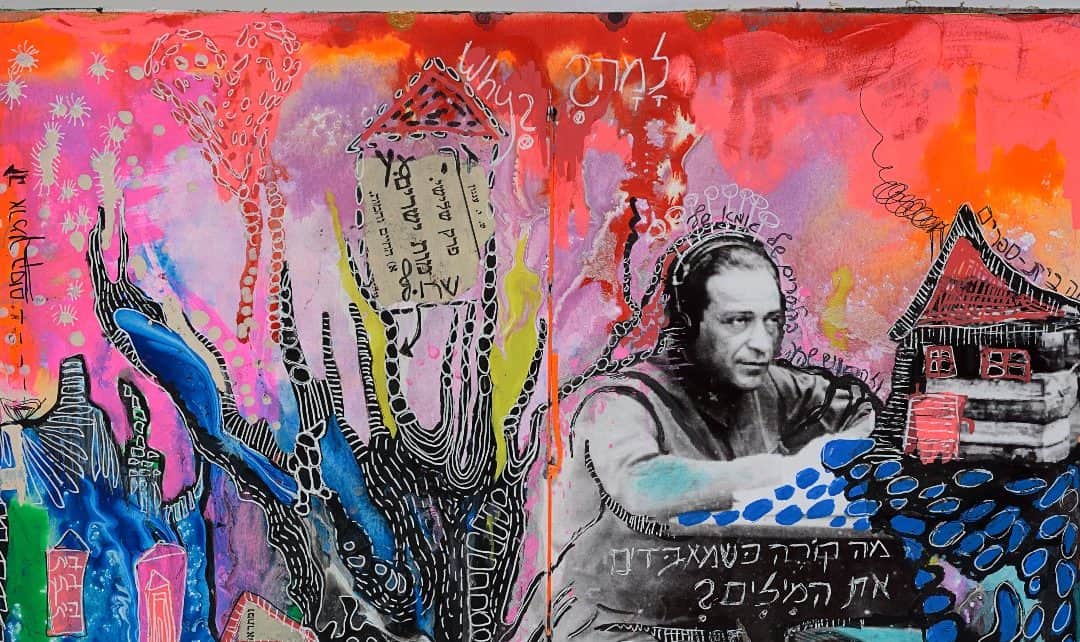
Carl Jung kept several visual journals, the best known being The Red Book, in which he painted the difficult visions that plagued him and the fantasies that rose in him. He said that being able to paint those visions carried him through a period when he feared he was losing his mind, and out of that journal came his theory of archetypes and the collective unconscious, along with his development of active imagination.

When The Red Book was published in 2009 many people came to regard it as the finest example of a visual journal there is, and in its wake art therapists began drawing on the journal in trauma work. The line that runs from Jung’s book to the notebook a woman sews on her kitchen table today is exactly what the 2016 paper set out to trace.

What does it look like in practice?

The paper follows a woman I called Irena, a pseudonym, a 36-year-old mother of two who took part in a mothers’ group I led for three years. She arrived unable to show affection to her children, especially her younger son, and at the first session she told me she had not touched art materials since second grade.

Three years is a long stretch, and her movement through it matters more than any single moment in it.

In the first year the theme of the group was the child in me, and the work went towards each mother’s connection to the girl she herself had been. Irena sat beside me, asked me to decide every placement for her, and checked after each choice whether it was all right. Together we rebuilt on the page the cramped flat her family arrived at when they immigrated from Russia, the flat she was sent away from to boarding school at fourteen, and halfway through she no longer wanted to stop working.

In the second year we widened the theme to the relationship with the children in the present. In the session where the mothers were asked to meet their children in imagination and hold them, Irena could not, so I took her to another room until she could see the embrace with her eyes closed, and then she smiled and said he was holding her back. At the following session, in the journal, she glued a photograph of herself and one of her son close together but unconnected, and only after I reminded her of the embrace did she ask me to help her cut out the mother’s arms and reattach them so that they held him. Later that same year she made a figure she called the anger goblin, photographed it, showed it to her family with real pride, and around that time she also decided for the first time to come home at six in the evening, the hour her children come home.

In the third year I no longer had to lead. Her son’s behaviour and her own behaviour towards him had both changed markedly, she became the veteran mother in the group who tells the newcomers what she went through, and she worked in the journal by herself. At the last session of that year she glued a photograph of herself as a child beside a photograph of her son, side by side but not touching, asked for one piece of technical help so that they would hold hands, and finished everything else alone. At the bottom she wrote: we both had independence.

The change did not begin in conversation, and it did not happen in a single session. It began the moment the page made the embrace visible, before Irena knew how to give it at home, and from there it took another full year to become something she could do on her own.

Who is this approach for?

Both in the paper and in everything since, the answer has held: it suits adults who would never walk into art therapy by the usual door. Women for whom the word therapy is off-putting, women certain they cannot draw, and women looking for somewhere to put themselves inside a stretch of life that is hard to cross alone.

The groups that come to me include women living with cancer, with divorce, with the move into later life, with grief for parents or partners, and with the search for meaning. What they tell me is that the journal becomes a kind of companion in daily life, and that the techniques learned in a session set off work at home too, in hours when nobody is guiding them. That is the bridge the method is built for: between the therapeutic space and the life being lived outside it.

Frequently asked questions

Is visual journaling the same as art therapy?
Not necessarily. Working in a visual journal at home is a tool for self-reflection and processing, and it is not therapy. It becomes a therapeutic tool when it happens inside a professional relationship, with a therapist or trained guide who works with both the journal and imagery techniques.

What is the difference between a visual journal and a written journal?
A written journal needs words and relies on narrative order, and many people are afraid to commit their real thoughts to paper. A visual journal allows symbolic expression through colour, line and image, expression that need not be confessional and still reaches deep.

Do I need to know how to draw to keep a visual journal?
No. The mixed-media language is built on techniques that require no drawing skill at all: backgrounds, prints, spatters, collage and simple mark-making. Meaning comes from how the layers combine, not from draughtsmanship.

How long should a visual journaling session be?
At least an hour and a quarter to an hour and a half for individual work. The session contains a crossing from imagination work into making, and that crossing does not happen inside fifty minutes.

What is the difference between Internal Journey Journaling and the SoulPages method?
There is no difference; they are two names for the same method. Internal Journey Journaling is the name it was published under in the 2016 academic paper, and SoulPages is the name it has carried since, and the name guides are trained in today.

What are the theoretical sources behind the method?
Principally Winnicott, especially potential space and the transitional object; Carl Jung and The Red Book; Lucia Capacchione and The Creative Journal; Cathy Malchiodi’s writing on visual journaling in trauma work; and the Voice Dialogue method of Hal and Sidra Stone.

Where was the original paper published, and can I read it?
It was published in 2016 in Bein HaMilim (Between the Words), the journal of Kibbutzim College of Education in Tel Aviv, issue 11, under the name Rakefet Link-Skop. It is freely available on the college’s website, in Hebrew.

Ten years have passed since that paper was written. The method has a name now, a school that trains guides, and hundreds of women working in it, and its foundations have not moved: one book, layers of material, enough time, and someone making alongside you. Give yourself twenty minutes today, take a page, some watercolour, a few images, and make something that reflects exactly what you are feeling right now. If you are still deciding what you need, this piece on art journaling versus art therapy lays it out, and there is a free lesson waiting when you join the list: soul-pages.com

Read the full academic paper: Rakefet Link-Skop, “Internal Journey Journaling”: The Visual Journal as a Therapeutic Tool, Bein HaMilim, issue 11, Kibbutzim College of Education, 2016 (Hebrew)

With love, Rakefet
Art Journaling After Trauma: Working Through Resources Instead of Through the Pain

Art Journaling After Trauma: Working Through Resources Instead of Through the Pain

Art Journaling After Trauma: Working Through Resources Instead of Through the Pain

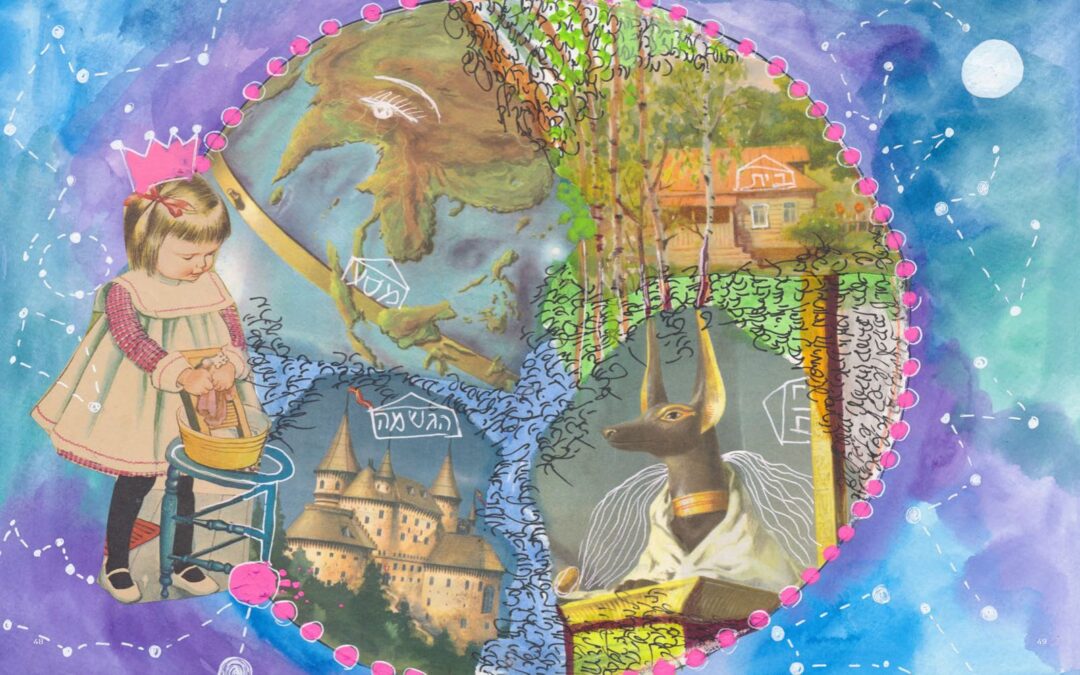
Art journaling after trauma works through resources, not through the difficult memory. Instead of asking a woman to tell you what happened to her, you build on the page a connection to the strengths she already holds: people she loves, places that feel like home, moments when she was braver than she believed. That ground thickens layer by layer, and only from there can the heavy material move at its own pace, if it moves at all.

I set this out in a paper published in May 2024 in Psychologia Ivrit (Hebrew Psychology), Israel’s main professional portal for psychologists and therapists, under my earlier name, Rakefet Link-Skop: “Bringing Back the Light”: The Visual Journal in the SoulPages Method as an Intervention for Hope and Resilience Resources. The paper documents group work with women evacuated from the communities around Gaza in the months after October 7th, and what follows is that paper in English, with a link to the original at the end. The rest of the publications and press are gathered on the publications page.

My name is Rakefet Hadar. I am an art therapist, an author, and the founder of the training school for SoulPages guides. Then October 7th came, and together with guides trained in my method I sat facing hundreds of evacuated and surviving women, with a blank page and a pencil in hand, and we asked ourselves the only real question there was: what do you do with pain that has no words?

How did the volunteer project begin?

In the first weeks after October 7th I contacted Merav Shaked, a SoulPages guide and an entrepreneur, and together we set up a volunteer network of guides who went into the hotels and the evacuation centres. We called the project Bringing Back the Light, and we meant it literally: not treating the trauma, but searching together for the points of light that remained and strengthening those.

Each group was given ten sessions, two to three hours each. I wrote the paper afterwards because I understood that something had happened there which other therapists deserved to know about.

Why not work on the trauma directly?

Because this is accompaniment rather than treatment. The women sitting opposite us were inside the event and not after it. They were still living in a hotel room without knowing when they would go home, and any request to tell the story would have pulled the memory close far too fast.

That distinction is the heart of the whole thing, and it is the line between processing and re-experiencing:

  • Processing brings the pain closer at a pace the woman controls, and leaves her tired and a little lighter.
  • Flooding puts the body back on alert, as though the event were happening again right now, and leaves her shaking and disconnected.

The trauma is in the room and everyone knows it is there, but it is not the door you come in through. The door is made of the woman’s own resources.

What are the seven elements of the SoulPages method?

The SoulPages method is a way of working in a visual journal in which every page is built in layers, following a fixed order of seven elements, so that what was split apart inside reconnects on paper.

  1. Intention. One word or one sentence you enter the page with. Not a subject to work on, but an intention.
  2. The magic of chance. Opening the page with a technique you cannot control, a print or a spatter, so that something nobody planned is already there, waiting.
  3. Background. The first layer, which gives the page its atmosphere before it holds any content at all.
  4. Colour. The page’s big emotional choice. Colour says the thing that does not have a name yet.
  5. Image. A cutting from a magazine, an old photograph, a simple drawing. The image holds the experience whole but covered.
  6. Line. What connects the parts, encircles them, or keeps them apart.
  7. Text. One word or one sentence, at the end and never at the start, once the page has already said its piece.

That order was built deliberately. It begins where there is no judgement, and reaches words only at the point where they are no longer required to explain anything.

What made a hotel room feel safe enough to work in?

Four things, described in the paper as the pillars of the intervention:

  • The frame. A personal journal for each woman, one book that stays hers even when the house itself is an open question. When there are no walls, a sewn notebook is a place.
  • Session content. Each meeting is built around a metaphorical image, the tree of resources for instance, and from there a gentle mapping of the parts of the psyche, including work with the inner child and with archetypes of strength.
  • Extended time as community time. Two to three hours are not needed for the making alone. These are the hours in which women talk while their hands are busy, and community forms out of that conversation.
  • The guide’s presence. The guide works beside them rather than in front of them, and part of her job is to notice the points of light and name them, including while the woman herself still cannot see them.

What happened to those groups afterwards?

What surprised me more than anything is that some of the groups carried on meeting by themselves once the ten sessions had ended. Women organised to make things together on days when no guide came, and the journal went on accompanying them through daily life inside the hotel.

That was the point of this tool from the start. Not a woman dependent on a guide, but a woman walking out with a notebook under her arm and knowing how to open it by herself, on the day that turns out to be hard.

Does this apply to people who have not been through something extreme?

It does, and the principles are identical. Any woman moving through a period she has no words for, grief or illness, divorce, separation, a change she never asked for, can work in exactly the same order: intention, an uncontrolled background, colour, image, line, and then one word.

The difference between working alone and working with a guide is not the technique but the question of who is holding the page with you. If flooding returns every time you open the journal, that is the signal to work with professional support rather than on your own.

Frequently asked questions

Does art journaling help after trauma?
It does, when it works through resources rather than through the difficult memory itself. Journaling that connects a woman to the strengths she already has builds resilience and a sense of capability, and lets the heavy material move at its own pace. Journaling that asks her to reconstruct the event can flood her instead.

What is the difference between creative accompaniment and psychological therapy?
Accompaniment in a visual journal works on resources, hope and a sense of capability, and does not treat the trauma itself. Psychological therapy and art therapy engage the traumatic material directly. They do not replace one another, and many women use both at the same time.

What are the seven elements in the SoulPages method?
Intention, the magic of chance, background, colour, image, line and text. Every page is built in layers in that order, so that words arrive last, after colour and image have already said the difficult part.

How long is a group visual journaling session?
Two to three hours. The extended time is not a luxury; it is what allows the crossing from inner work into making, and it is where the conversation between the women happens.

Do I need art experience to join a group like this?
No. Most of the women who came had not touched art materials since primary school. The techniques are built specifically so that no drawing ability is required, and the result comes from how the layers combine.

Where was the paper published and can I read it?
It was published on 23 May 2024 on Psychologia Ivrit (hebpsy.net), Israel’s professional portal for psychologists and therapists, under the name Rakefet Link-Skop. It is available there in Hebrew.

One of the women told me, after the third session, that those had been the two most meaningful hours she had spent in all those weeks. I had said nothing wise to her. I sat down beside her, suggested yellow, and she added it herself. Give yourself twenty minutes today, take a page, some watercolour, a few images, and make something that reflects exactly what you are feeling right now. If something heavy surfaces while you work, here is exactly what to do in that moment. And there is a free lesson waiting when you join the list: soul-pages.com

Read the full professional paper: Rakefet Link-Skop, “Bringing Back the Light”: The Visual Journal in the SoulPages Method as an Intervention for Hope and Resilience Resources, Psychologia Ivrit, May 2024 (Hebrew)

With love, Rakefet

When Words Hurt: Visual Journaling When There Are No Words for the Pain

When Words Hurt: Visual Journaling When There Are No Words for the Pain

When Words Hurt: Visual Journaling When There Are No Words for the Pain

When words hurt, you begin with the hands. Instead of asking a woman to tell you what happened to her, you give her a page, some colour and an image, and she puts down the thing that has no name yet. The page holds the experience whole and covered at the same time, and the word, if it comes at all, comes last and by her choice.

That is what I wrote in a chapter published in October 2024 in the anthology Safe Studio, from YAHAT, the Creative and Expressive Arts Therapies Association in Israel, under the title “When Words Hurt and Heal”: Visual Journaling with Women Evacuated from the Gaza Border Communities. The chapter is a testimony rather than a protocol, and it documents eight weeks of journaling with women evacuated to a hotel in the south of Israel. This page is its summary in English. Everything else I have published is gathered on the publications page.

My name is Rakefet Hadar. I am an art therapist, an author, and the founder of the training school for SoulPages guides. I heard about October 7th while I was in Mexico, and in the days that followed I learned that three women I knew from the Visual Journal Tribe community had been murdered in their homes that same Saturday. In early December I drove south with Maya Hod-Ran, a bibliotherapist, with no idea what was waiting for us there.

What happens when someone loses their words?

In the hotel lobby a woman sat down beside me. She had lost her daughter that Saturday. She made a page, and I asked her to give it a name. She broke into a heartbreaking cry, tried to describe what cannot be described, and then went silent.

That moment is where the chapter’s title comes from. Words, which are our ordinary way of telling someone who we are, had become another wound for her. In the visual journal the order is reversed: colour and image speak first, and text arrives last, if at all.

The SoulPages method is a way of working in a visual journal in which every page is built in layers, following a fixed sequence of seven elements, so that the word only enters after the page has already said its piece.

What is an open studio, and why is it so hard?

An open studio is a therapeutic model in which the making space is open to anyone who walks in, with no registration and no fixed group. In the evacuation centres it was open in the most literal sense: a table in a hotel lobby, and people of every age making their inner world visible without a scrap of privacy.

The first time I walked in I felt lost, as though I were being carried off by the general sense of loss around me. Neglect, mess and chaos, and around all of it a grand hotel inside which this was happening. The gap between the two was impossible to take in.

What finally worked was not an organised workshop but moving between tables. I went up to each woman who arrived, showed her my own journal, told her about the seven elements, and invited her to choose one image for what she was feeling right then. The hands began to make, and the words began to flow on their own.

How do you build a safe space when there are no walls?

Three things held the sense of safety before we ever had a room of our own:

  • A personal journal for every woman. Notebooks hand-sewn in advance by dozens of volunteers. When there is no house, a sewn notebook is a place.
  • The suitcase. We kept the materials in it, and it became an object that belonged to the group. Two women were put in charge of it, and it gave a small anchor to women who had lost everything they owned.
  • Regularity. Two fixed days in the schedule, week after week, in a place where nothing else was fixed.

When we later moved into a closed studio, four walls made possible what the lobby could not: meditation, guided imagery and speaking out loud. The worries I had about the move turned out to be unfounded.

How do you work with pain without flooding someone?

Every week I gave real thought to what the session would be called. I chose metaphorical names that connect a woman to her strengths and to hope, the Tree of Resources, My Powers, Landscapes of Hope, the Inner House, because the name is the first thing she hears and it tells her what she is walking into.

At the same time I learned how important it is to leave room for the pain and the uncertainty too, not only for the light. As the group came together, the moment ripened for heavier material. In one session each woman was asked to recall a life-giving figure who stays with her, and two of them spoke about a mother who had died many years earlier and still supports them from a distance.

One session has stayed with me since. I called it Painting the Darkness. We worked with a technique in which rainbow colours are revealed from beneath a black ground, and I asked the women to write a paragraph beginning with the sentence “when I paint the darkness I will discover that…”. Fine lines of light started to appear out of a great darkness.

I also learned something there about my own language. I told one of the women I would bring her gold thread from home the following week, and she answered me sadly that when I say “from my home” it hurts, because she has no home and everything she had collected over the years had burned. I understood how much care words that are trivial to me can require.

What do you do in a week when making is impossible?

One of the hardest weeks was the one in which it was announced that hostages had been murdered in captivity. The atmosphere was unbearable, eyes gone dull, anger and disappointment, and the trauma struck all over again.

The women themselves brought the answer. They arrived holding newspapers and asked to work with the terrible headlines. I guided them to express the pain and the anger however they wished, and to add a pinch of hope to the page as well, and we worked with poems of hope we had printed in advance, each woman choosing one line she connected to.

That is the simplest instruction I have, and it holds on an ordinary day too: do not block the pain, and do not stay only inside it. Both of them on the same page.

What is left for a group after the facilitator leaves?

In the eighth and final session we made a collective visual poem, one line from each woman, out of the bags of images I had prepared for them at home. The excitement was enormous, and the sadness of parting sat right beside it.

That parting was not an ending. Together with the centre’s director I built a continuation plan: I would come back once a month for two days of workshops, and alongside that I would mentor volunteers who came weekly to run journaling sessions for the group. The hours that suddenly opened up in my days back home felt strange, and my heart stayed there.

Frequently asked questions

What do you do when there are no words for what happened?
You start from the material rather than the story. Choosing a colour and an image requires no phrasing, and it lets the experience be placed on the page without being said aloud. The text, if it comes, comes last and by the maker’s choice.

What is Safe Studio?
A project of YAHAT, the Creative and Expressive Arts Therapies Association in Israel, which ran therapeutic making spaces for refugees from Ukraine in 2021 and was reactivated when war broke out in October 2023. Some fifty such studios opened across the country.

What is the difference between an open studio and a closed group?
In an open studio the space is open to anyone who walks in, with no registration and no fixed membership, which makes it highly accessible but offers no privacy. A closed group in its own room allows meditation, guided imagery and personal sharing, none of which are possible in an open lobby.

Is it dangerous to work with newspapers and painful headlines?
Not when it is done with a facilitator and on one condition: something of hope goes onto the page alongside the pain. The women asked to work with the headlines themselves, and the instruction was to express the anger and add a pinch of light to the same spread.

Who wrote the chapter and where was it published?
Rakefet Hadar, in the anthology Safe Studio published by YAHAT in October 2024, edited by Dr Tamar Kichli-Borochovsky, Nona Orbach and Chen Jakobi. The chapter opens the section called Gathering Materials, on page 17. The anthology is in Hebrew.

Can you work this way on your own at home?
Yes, and that is exactly the intention. The sequence is fixed: intention, a background made without control, colour, image, line, and then one word. If making floods you every time you open the journal, that is the sign to work with a professional rather than alone.

I came home after eight weeks, and the sense that we were all part of one whole stayed with me. I said nothing clever there. I sat beside them, offered a material, and they added their own. Give yourself twenty minutes today, take a page, some watercolour, a few images, and make something that reflects exactly what you are feeling right now. And if something heavy comes up while you work, here is exactly what to do in that moment. There is also a free lesson waiting when you join the list: soul-pages.com

The full chapter was published in Safe Studio, an Anthology: Creative Texts in the Wake of the Iron Swords War, YAHAT, October 2024 (Hebrew), section 1, page 17.

With love, Rakefet

Is It Safe to Journal About Trauma? What an Art Therapist Wants You to Know

Is It Safe to Journal About Trauma? What an Art Therapist Wants You to Know

Is It Safe to Journal About Trauma? What an Art Therapist Wants You to Know

Yes, journaling about trauma can be safe and deeply healing, but not unconditionally. Safety comes from connecting to your strengths and resources first, approaching the memory only in small, chosen doses, keeping one foot in the present, and knowing how to close the page when you are done. Diving straight into your rawest memory, alone and unprepared, can overwhelm you instead of helping you.

Almost every article about journaling and trauma says the same two things: “journaling helps” and “this is not a substitute for therapy.” Both are true. But nobody tells you the part in between, the part you actually need on a Tuesday night when the notebook is open and your heart is racing. I want to give you that part. I am a trained art therapist, the creator of the Soul Pages method of visual journaling, and since October 7th I have sat with hundreds of women survivors in Israel, holding a blank page together with a pain that had no words. This is what I have learned about doing this work safely.

Can journaling about trauma make things worse?

It can, if it turns into reliving instead of processing. Writing or creating about a traumatic memory brings it close, and if it comes too close too fast, your nervous system can respond as if the event is happening again: racing heart, numbness, fog, panic. That state is not healing, it is flooding. The practice below exists to keep you on the healing side of that line, where you touch the memory and stay yourself while you do it.

How does the Soul Pages method approach trauma?

Not head-on. In Soul Pages we never go to the trauma directly unless you brought that material yourself and you are ready to work with it. The trauma is there, we know it exists, and it is not the door we walk through. Every session begins by connecting to the strong, good parts of you and to your resources: people you love, parents and family, including the ones who are no longer alive, places that held you, moments you were braver than you knew. There are many, many ways to connect to strengths and resources on a page, and this is the unique heart of the method: the stronger that ground becomes, the more the hard material can soften and move at its own pace.

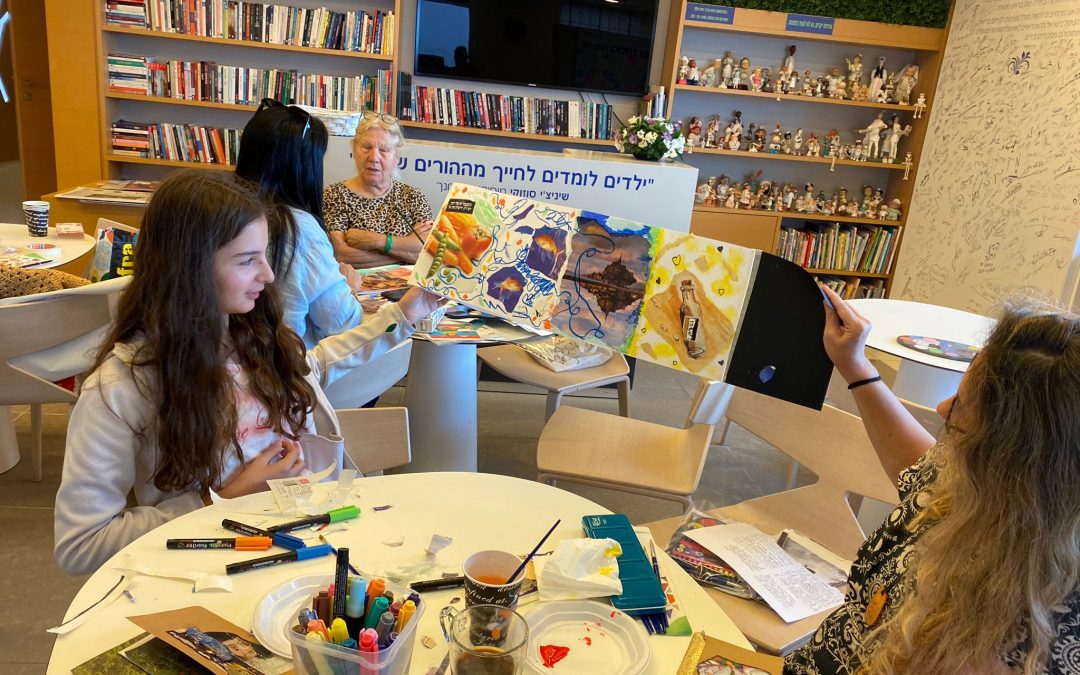
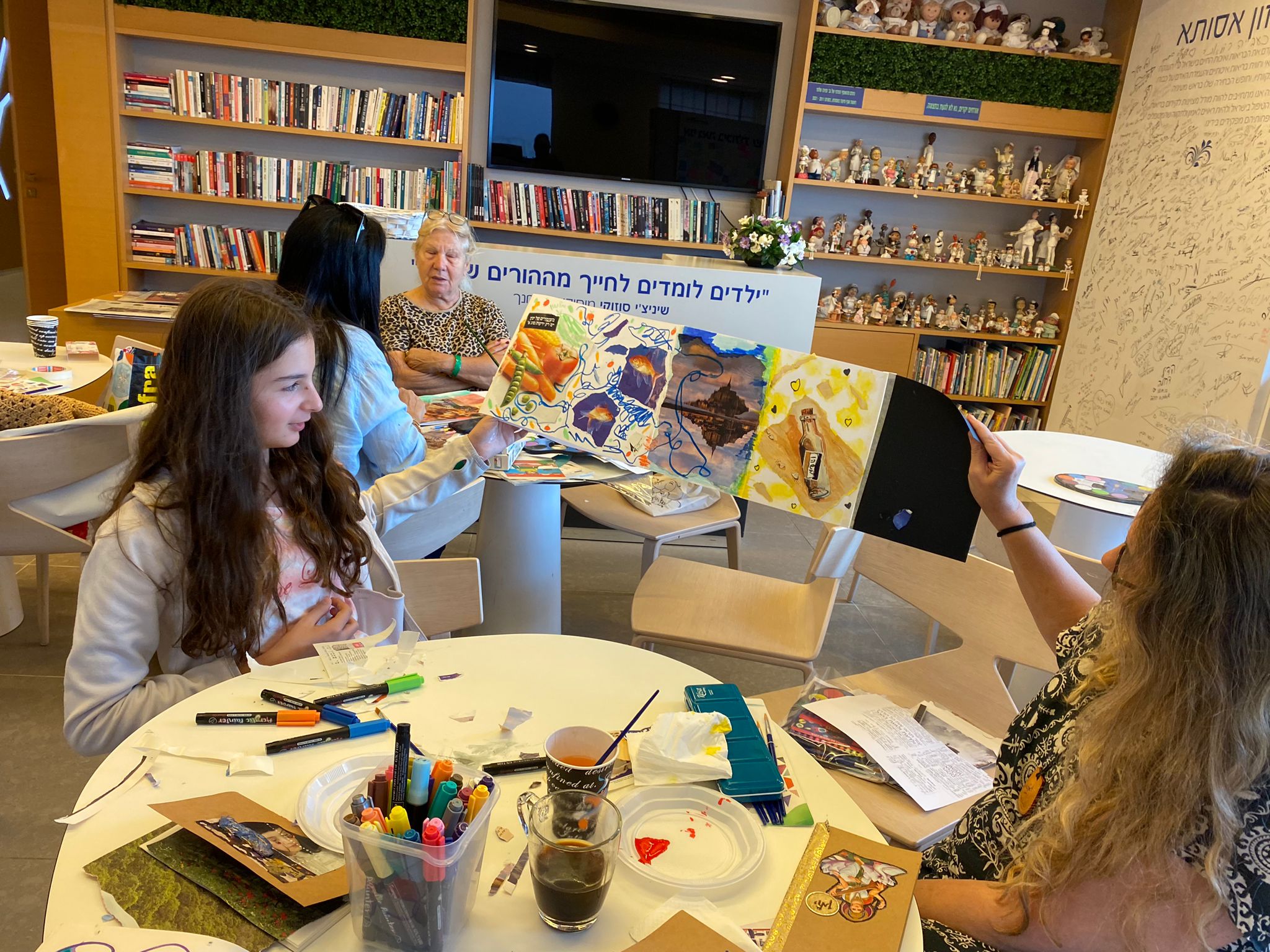
Community is a resource too, and a very significant one. Creating alongside other women, in a group or with a trained facilitator, means your page is witnessed and held, and what one woman dares to put on paper opens a door for all the others.

What are the signs you should pause?

Stop and step away from the page, gently and without any sense of failure, if you notice:

  • Your body switching to alarm: pounding heart, shallow breath, trembling, nausea.
  • Going blank or foggy, feeling far away from the room, losing track of time.
  • The writing pulling you into the memory in loops, the same scene replaying without relief.
  • Feeling worse after journaling, again and again, rather than emptier and lighter.

One hard session is not a red flag; it happens. The same overwhelm returning every time you open the journal is your signal that this material needs professional company, not more solo effort.

How do you journal about trauma safely, step by step?

  1. Set a container before you start. Decide how long you will work, twenty minutes is plenty, and set a timer. Choose a stopping point before you begin, the way a swimmer checks where the ladder is before entering the pool.
  2. Make a resource page first. Before you go anywhere near the hard material, fill a page with what steadies you: a color you love, an image of a safe place, words of someone who loves you. This page stays in the journal. It is the place you return to. In the Soul Pages method this is not a warm-up before the real work; it is the heart of the work.
  3. Work at the edges, not the center. You do not have to write what happened. Start with where you are now: what the memory feels like in your body today, what color it would be, what it needs from you. The center can wait months. It can wait forever. Healing does not require a full retelling.
  4. Let images carry what words cannot. This is why I work in a visual journal rather than a written one. A torn paper, a smear of dark blue, a small figure in a large empty page, these can hold an experience at exactly the distance you can bear. The image says it without making you say it.
  5. Close the page deliberately. When the timer ends, end. Some women draw a border around what they made, some write one closing word, some physically close the journal and put both hands on the cover for a breath. The ritual matters: it tells your nervous system that the visit is over.
  6. Come back to the room. Name five things you can see, feel your feet, drink water, step outside. Give yourself ten ordinary minutes before returning to your day.

Why can images be gentler than words?

Words demand a story: first this, then that. A traumatic memory often is not stored as a story, it lives in fragments, sensations, colors. Asking it to become sentences too early can force you through the worst parts in order. An image lets the experience arrive whole but veiled, as a symbol that you control. I have watched this again and again in my Soul Pages work: a page of color and torn paper says what happened without the woman having to say it, and the page holds it, so she does not have to hold it alone.

When should you bring this to a therapist instead?

Journaling alone is enough when the material is heavy but moves: you create, something shifts, you feel a little lighter or clearer afterward. Bring in a professional when it does not move, when the flooding signs above repeat, when sleep or daily functioning start to suffer, when there are thoughts of harming yourself, or when the trauma is recent and still raw. This is not a downgrade. A therapist does not replace your journal; the journal often becomes the bridge, and the pages you have made can travel with you into that room.

Frequently asked questions

Is it safe to journal about trauma without a therapist?
Often yes, if you pace yourself: time-limited sessions, working at the edges of the memory rather than the center, and a clear closing ritual. If journaling repeatedly leaves you flooded, numb, or worse than before, that material needs a professional alongside you.

Can journaling about trauma make you feel worse?
Temporarily, yes; touching pain stirs it. The difference to watch is direction: healthy sessions leave you a little emptier and clearer, while sessions that repeatedly end in panic, numbness, or spiraling mean you are reliving rather than processing.

Do I have to write about what happened?
No. You never have to retell the event. You can work with how the memory lives in you today, in colors, shapes, and single words, and let images carry the parts that language cannot hold yet.

What is the safest way to end a trauma journaling session?
End at the time you set, close the page with a deliberate gesture such as a border, a closing word, or simply shutting the journal with both hands, and then ground yourself in the room for a few minutes before returning to your day.

Is visual journaling better than written journaling for trauma?
For many women, yes, because images can hold an experience at a bearable distance without forcing it into a story. Written and visual journaling also combine well: a page of color and imagery first, then a few words if they come.

If you are reading this with a specific heaviness in mind, I want you to hear one thing: the fact that you are looking for a careful way in, instead of just diving, is already wisdom. Your pace is not a weakness. It is the method. If you would like a gentle, structured way to begin, my guide to keeping an art therapy journal walks you through the first pages, and the Soul Pages courses at soul-pages.com go deeper whenever you are ready.

With love,
Rakefet

Balancing our inner parts with SoulPages

Balancing our inner parts with SoulPages

One of the things I did as an art therapy student was to create my art therapy journal to keep track of my path to healing.

This was a huge part of my healing journey, and it helped me develop the SoulPages method with the seven elements.


The idea of inner parts is an old idea of many psychologists and theorists.

Freud divided the human psyche to Ego,Id, and Superego. The Id is all our inner parts that are driven by desires- eating, sex, etc

The superego parts tell us what we should do in the world. These parts are more critical and symbolize society’s and our parents’ demands.

Our inner critic usually “sits” in the superego area of the soul..

Our ego is built from a balance of the superego and the id parts.

The metaphor that Freud used is a bit militant- the Superego and the Id fight, and the Ego is trying to balance them.

 I prefer to look at the soul as a magical, mythological world full of all parts, energies, symbols, voices, colors, numbers, and entities.

Each of these parts can symbolize a part of our soul.

All these parts create a world, an ecosystem dependent on all its parts.

We have to try and understand as many possible of these different parts.

In the SoulPages method, the main aim is to activate positive parts of our ecosystem. parts that can contribute to well-being and self healing.

It is also important not to hide or neglect unfunctional parts such as sadness or neglect and self harm- but the idea is to connect to the positive energies and activate more positive energies as possible.

In order to do that I advise you to start your own practice of art therapy journal and work everyday on one positive image that you can add to your life.

Extracting the gold of childhood trauma

Extracting the gold of childhood trauma

Like many people around me, I also experienced traumatic events in my childhood and adolescence.

It took me years to realize that I’m not different or special; we all experience traumatic moments in our childhood, some more than others. but still, we all have our share of sad and difficult events that are part of us.

When I was 40 after I lost my pregnancy in week 17, I sank into 18 months of depression, and I started to feel obsessed with discovering how can I heal my inner wounds.

I understood that my depression was connected to these past traumatic experiences.

 I knew that I had to befriend all my inner “Demons”

I learned that the trauma is what happened to me and what brought me so far, and the fact that I overcame it shows the resilience and abilities that I possess.


I began my healing when I started to create mindful art pieces, small spreads in my visual journal that captured something of my childhood.

I decided to let the trauma that I experienced be the background of my paintings and writing.

For months I would write on the page and then cover it with my favorite colors and beautiful images.

In that way, I didn’t hide or ignore the trauma, I accepted it as an important part of my growth as a person.


Allowing myself these mindful art moments helped me connect with the healthy parts of my soul, these lighter, happy, joyous, strong, and resilient parts.

I can’t change the past, but I believe that each of us can extract the “gold” out of his/hers childhood experiences and pass it on to others.


This is why I decided to create the SoulCircle community- so we can all learn from each other and we could acknowledge each other’s wounds, not from a pitiful point of you, but instead from an admiring, respectful gaze that says- you are so brave!! 

1