
Bridges to Myself: The Visual Journal Protocol for Easing Tension and Connecting to Your Resources
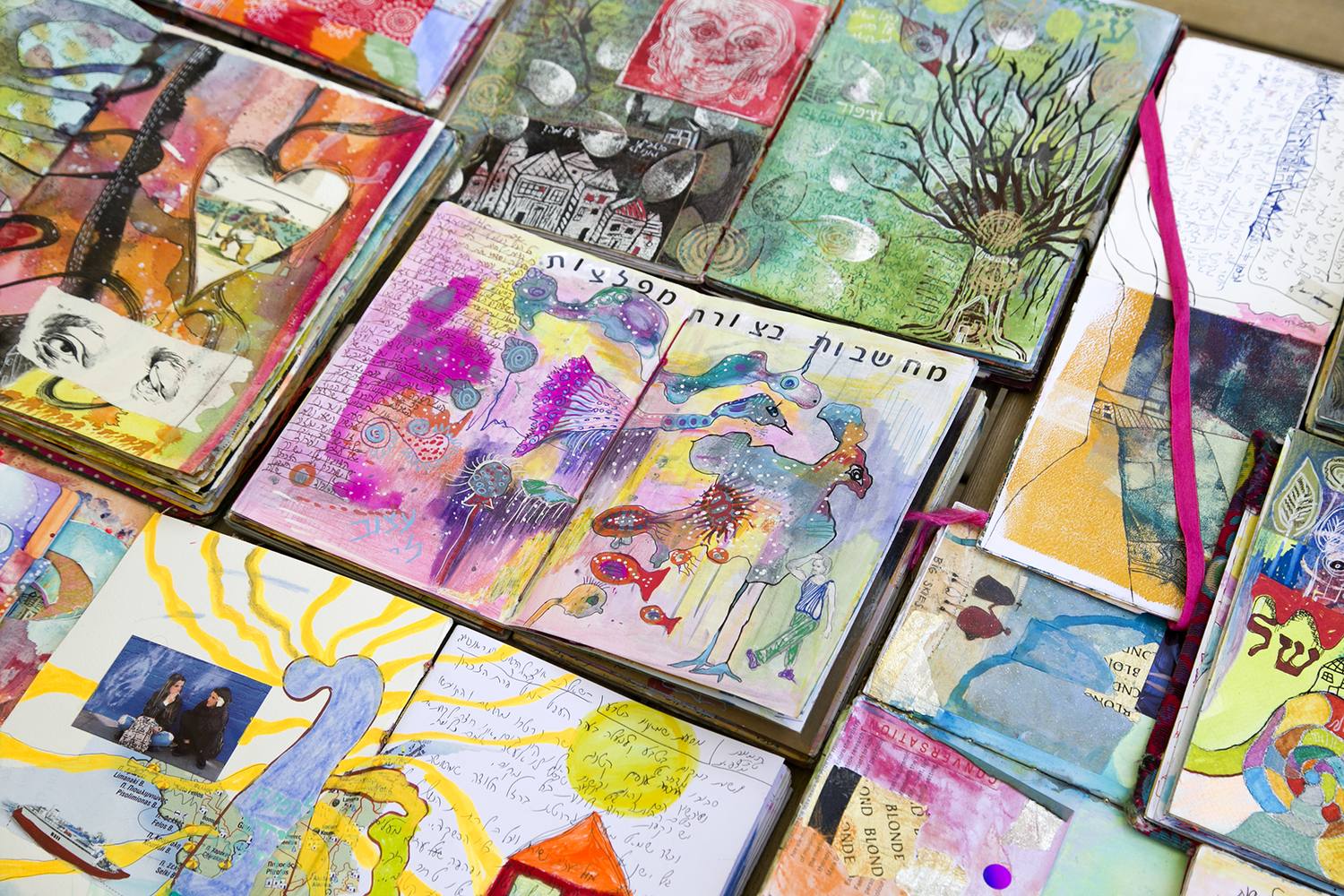
Bridges to Myself is a structured protocol for making one page in a visual journal, following the seven elements of the SoulPages method, designed to ease tension, uncover inner resources and widen perspective. It runs in seven steps in a fixed order, suits ages ten and up, and was written specifically to work with people who are certain they cannot make art.
I wrote this protocol as a chapter in Protocols of Strength and Hope: A Guide to Facilitating Arts-Based Workshops for Building Resilience in Collective Crisis and War, initiated and edited by Dr Ronen Berger, published by Ono Academic College in partnership with the Community Stress Prevention Center, 2024. It appears there as protocol 32. Since then it has become the basis for two workshops in a separate resilience programme for teenagers. Here it is in full, in my own English.
My name is Rakefet Hadar. I am an art therapist, an author, and the founder of the training school for SoulPages guides. The protocol was written in the months after October 7th, out of work with evacuated women in hotels and evacuation centres, and that is why it is built to travel: you can run it anywhere, including a corner of a hotel dining room.
Why work in a fixed order rather than freely?
Because a blank page is the most frightening thing in the room, and a woman who says she cannot draw is usually not talking about talent. She is talking about starting. A fixed order takes the question of where to begin off the table and leaves all of her attention for the content.
Each element is one more layer of meaning, and each connects to a different resource. The layers accumulate one on top of another, and what emerges is a page with its own logic and continuity, even though nobody planned it in advance.
What are the seven elements, and what does each one connect to?
| Element | What it connects to |
|---|---|
| Background | The ground we came from: family, culture, community, lineage |
| Intention | Values, beliefs and meaning. What we are willing to fight for |
| Image | Imagination, and the capacity to make healing metaphors |
| Line | Connections between separate parts of the psyche, and the joining of split ones |
| Colour | Feeling, including the feelings we set aside or push down |
| Text | Hope and insight, distilled into one sentence that holds the page |
| The magic of chance | Surprise and synchronicity, and the knowledge that reality has many layers |
What do you need to begin?
- Watercolour or acrylic paint
- Magazines or picture books you can cut images from
- Glue
- A black fineliner and a black marker
- Acrylic markers, or any markers you have
That is the whole list. Nothing on it assumes prior knowledge, and that is a deliberate choice rather than a concession: the simpler the materials, the easier it is to start.
The protocol, step by step
Part one, the background element
Choose three colours that feel good to you, colours that will act as anchors, and one colour that expresses the difficulty. Lay the good colours down with relatively slow movements while breathing deeply. The slow movement slows the breath, and that is part of the work rather than a preparation for it.
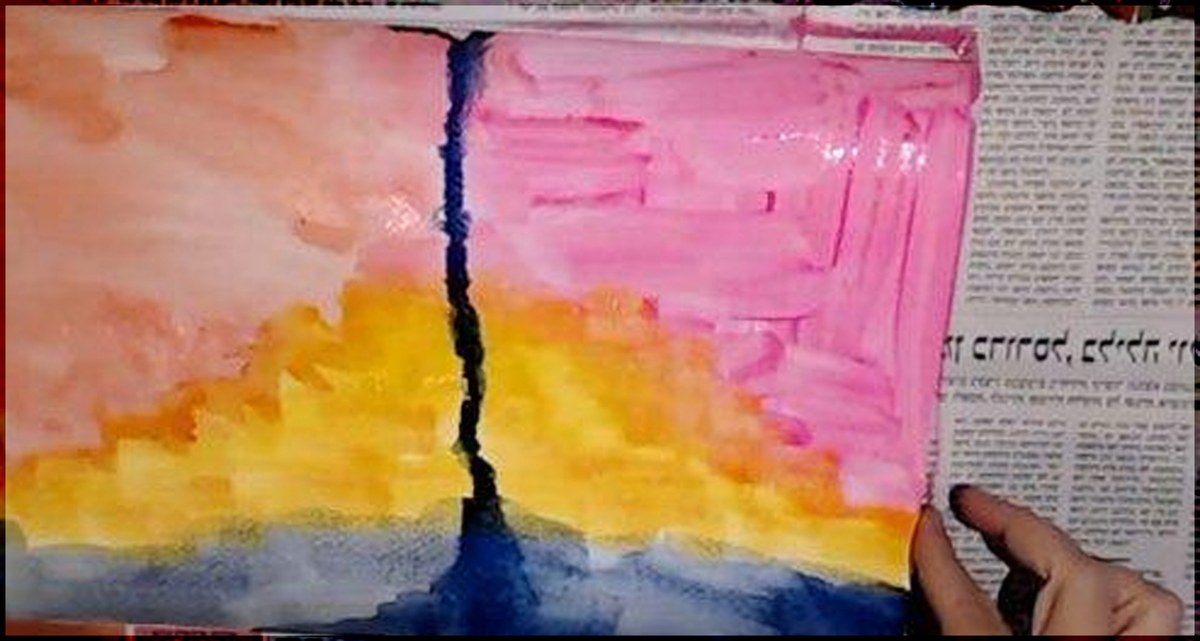
The colour that carries the difficulty goes on last, and deliberately so. You cannot ignore the difficulty, and you certainly can find ways to quiet it on the page.
Part two, the intention element
Write down every resource in your life. You can organise the list by area or leave it entirely open. Two questions that take it deeper: what would I like to strengthen in myself, and which resources do I wish I had and feel I still do not.
Part three, the image element
Choose between two and four images that represent your strengths, and think of one more resource you would like to build. Cutting from a magazine removes the pressure to draw well and leaves the choosing, which is the part that matters.
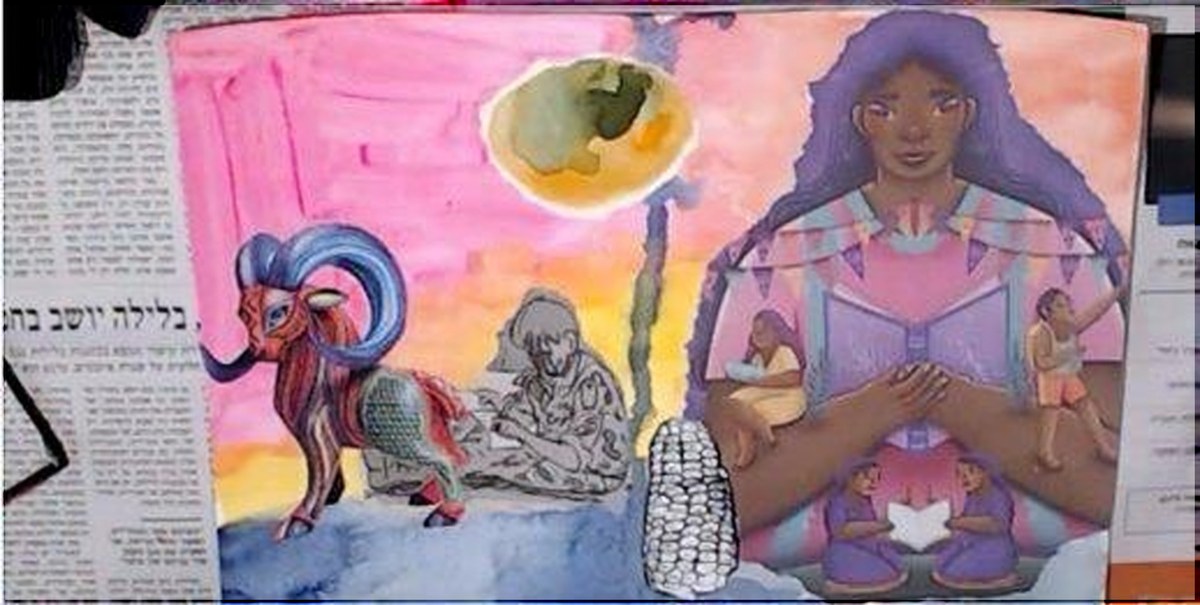
Part four, the line element
Take a thin black marker, or any marker, and connect the images so that a sequence forms. At this stage there is no need to think about the story, only to perform acts of connection with lines. You can also draw over the images you have glued down.
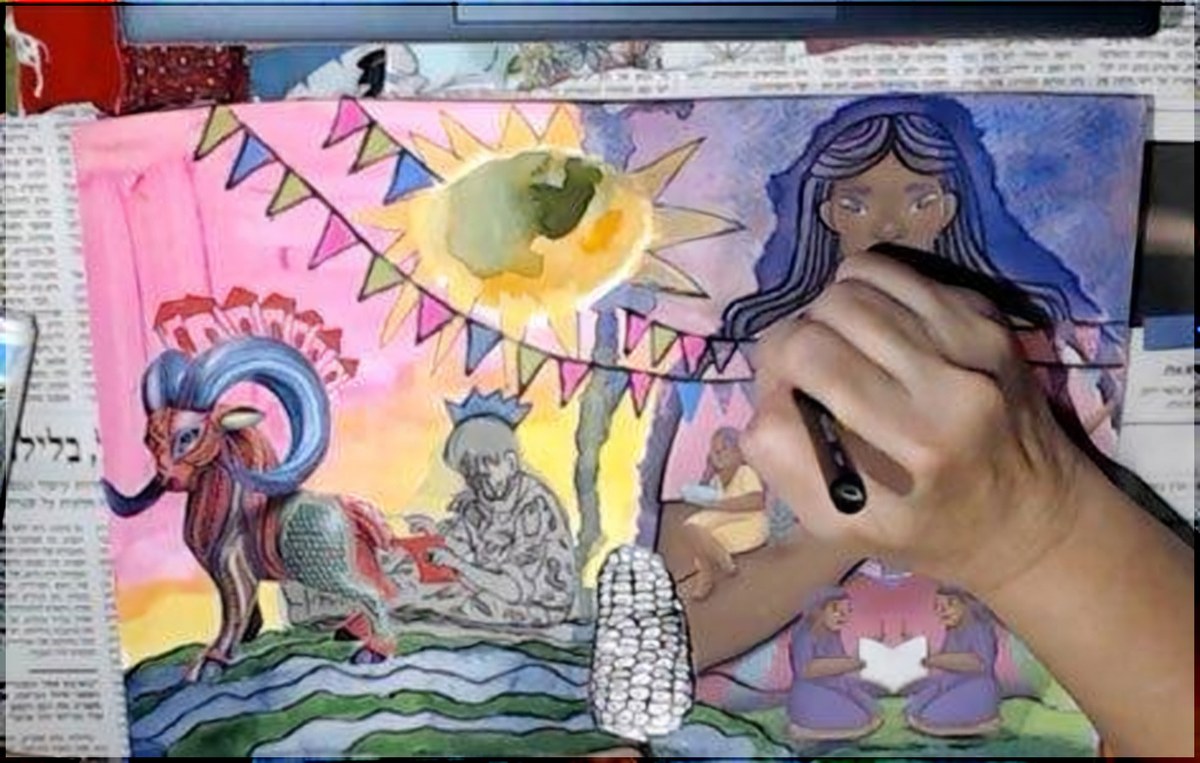
Part five, the colour element
Add colour to the page any way you like. Draw your own additions, or symbols that bring relief and act as anchors: hearts, flowers, houses. This is the stage where you are allowed to add a colour simply because it strengthens a good feeling.
Part six, the text element
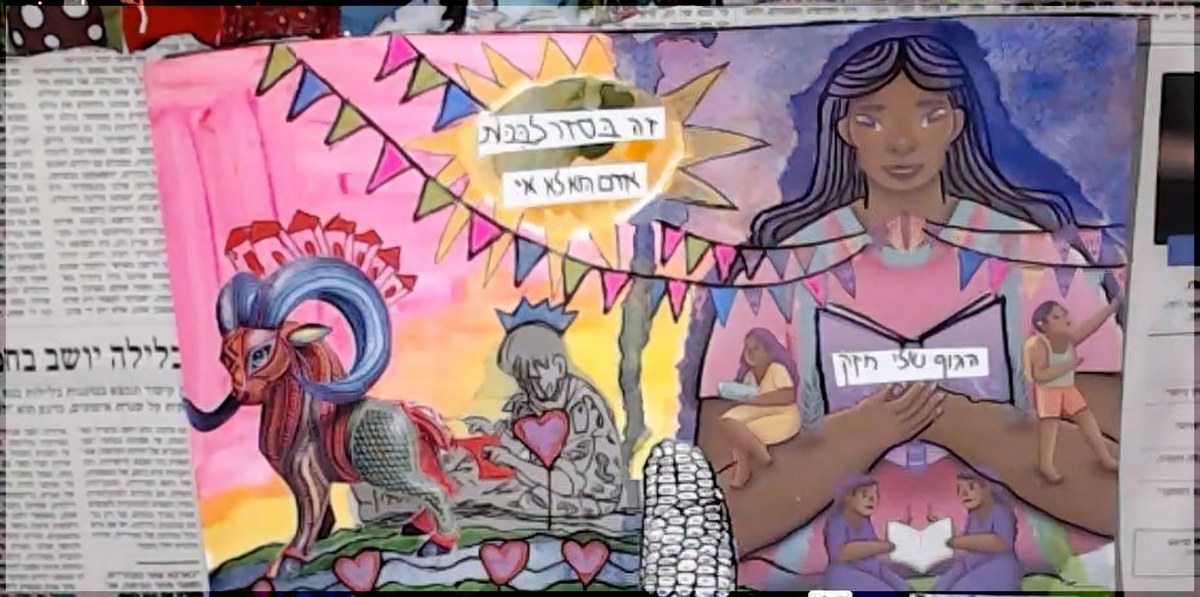
Look at what you have made and at the words you wrote, and see whether you can assemble short, strengthening sentences from them, a kind of message rising out of all the resources on the page. The sentences can be entirely spontaneous, as though the resource itself badly wants to tell you something: my body is strong as an oak, it is allowed to cry, my imagination flies like a bird.
Write the sentences on a separate white sheet, cut around them, and glue them onto the work wherever you choose.
Part seven, the magic of chance
Once the visual work is finished, look for what surprises you in it and put a spotlight on it.
In the piece I made, I glued down a figure of a colourful stag with antlers. Only at the end did I understand that the stag stood for my grandfather, Zvi Hadar, a Holocaust survivor who lost his entire family in the war, came to Israel and rebuilt his life from nothing. That connection to his strength moved me deeply, and helped me reach the power of transformation inside myself.
How do you share at the end without doing harm?
At the close you can show each other the work and share whatever you wish: the process itself, the meaning of one part or of the whole page, and you can also let a particular part speak in the first person, as though it were you.
Another option is to ask the group to say what they see in someone else’s work, which widens her perspective. Here it matters a great deal to stay inside the phenomenological approach: speak only about what I see in the piece, with no interpretation, no grading and no opinion.
If time is short, a brief personal share in pairs or small groups is better than a rushed circle with everyone.
Frequently asked questions
What is the Bridges to Myself protocol?
A structured seven-step protocol for making one page in a visual journal, following the seven elements of the SoulPages method, aimed at easing tension, uncovering inner resources and connecting to hope. It was published as protocol 32 in Protocols of Strength and Hope, Ono Academic College, 2024.
What age is it suitable for?
Ten and up, and it works equally well with adults who have no art experience at all. The techniques were chosen so that no drawing ability is required.
How long does it take to run?
It has seven parts and ends in sharing, so it needs an extended session rather than fifty minutes. A SoulPages group session usually runs two to three hours.
Can I use it professionally with groups?
Yes. That is exactly what it was published for, as a protocol for professionals in therapy, education and community work, in a book released free in Hebrew and Arabic. Credit and a link back to the source are appreciated.
What is the magic of chance?
The seventh element of the SoulPages method, in which you look for what appeared on the page without being planned and discover what it means. It connects you to surprise, to synchronicity, and to the knowledge that reality holds many layers of meaning.
Where can I read the original protocol?
In Protocols of Strength and Hope, edited by Dr Ronen Berger, published by Ono Academic College in 2024 and freely available on the college website. The protocol appears there on page 225, in Hebrew.
This protocol was written inside a war, for women who did not know when they would go home, and that is exactly why it is so simple. Give yourself twenty minutes today, take a page, some watercolour, a few images, and make something that reflects exactly what you are feeling right now. If you want the ground beneath it first, the research behind the method is here, and there is a free lesson waiting when you join the list: soul-pages.com
Originally published in Protocols of Strength and Hope, edited by Dr Ronen Berger, Ono Academic College in partnership with the Community Stress Prevention Center, 2024 (Hebrew). For everything else, see publications and press.
With love, Rakefet
Recent Comments