

Is It Safe to Journal About Trauma? What an Art Therapist Wants You to Know
Yes, journaling about trauma can be safe and deeply healing, but not unconditionally. Safety comes from connecting to your strengths and resources first, approaching the memory only in small, chosen doses, keeping one foot in the present, and knowing how to close the page when you are done. Diving straight into your rawest memory, alone and unprepared, can overwhelm you instead of helping you.
Almost every article about journaling and trauma says the same two things: “journaling helps” and “this is not a substitute for therapy.” Both are true. But nobody tells you the part in between, the part you actually need on a Tuesday night when the notebook is open and your heart is racing. I want to give you that part. I am a trained art therapist, the creator of the SoulPages method of visual journaling, and since October 7th I have sat with hundreds of women survivors in Israel, holding a blank page together with a pain that had no words. This is what I have learned about doing this work safely.
Can journaling about trauma make things worse?
It can, if it turns into reliving instead of processing. Writing or creating about a traumatic memory brings it close, and if it comes too close too fast, your nervous system can respond as if the event is happening again: racing heart, numbness, fog, panic. That state is not healing, it is flooding. The practice below exists to keep you on the healing side of that line, where you touch the memory and stay yourself while you do it.
How does the SoulPages method approach trauma?
Not head-on. In SoulPages we never go to the trauma directly unless you brought that material yourself and you are ready to work with it. The trauma is there, we know it exists, and it is not the door we walk through. Every session begins by connecting to the strong, good parts of you and to your resources: people you love, parents and family, including the ones who are no longer alive, places that held you, moments you were braver than you knew. There are many, many ways to connect to strengths and resources on a page, and this is the unique heart of the method: the stronger that ground becomes, the more the hard material can soften and move at its own pace.
Community is a resource too, and a very significant one. Creating alongside other women, in a group or with a trained facilitator, means your page is witnessed and held, and what one woman dares to put on paper opens a door for all the others.
What are the signs you should pause?
Stop and step away from the page, gently and without any sense of failure, if you notice:
- Your body switching to alarm: pounding heart, shallow breath, trembling, nausea.
- Going blank or foggy, feeling far away from the room, losing track of time.
- The writing pulling you into the memory in loops, the same scene replaying without relief.
- Feeling worse after journaling, again and again, rather than emptier and lighter.
One hard session is not a red flag; it happens. The same overwhelm returning every time you open the journal is your signal that this material needs professional company, not more solo effort.
How do you journal about trauma safely, step by step?
- Set a container before you start. Decide how long you will work, twenty minutes is plenty, and set a timer. Choose a stopping point before you begin, the way a swimmer checks where the ladder is before entering the pool.
- Make a resource page first. Before you go anywhere near the hard material, fill a page with what steadies you: a color you love, an image of a safe place, words of someone who loves you. This page stays in the journal. It is the place you return to. In the SoulPages method this is not a warm-up before the real work; it is the heart of the work.
- Work at the edges, not the center. You do not have to write what happened. Start with where you are now: what the memory feels like in your body today, what color it would be, what it needs from you. The center can wait months. It can wait forever. Healing does not require a full retelling.
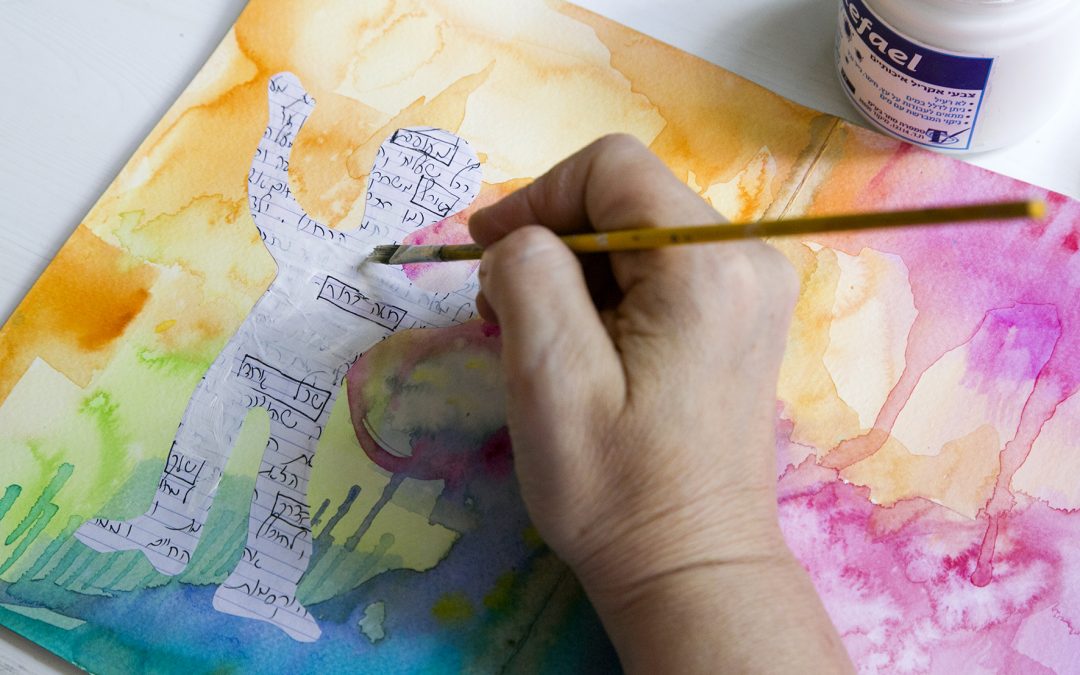
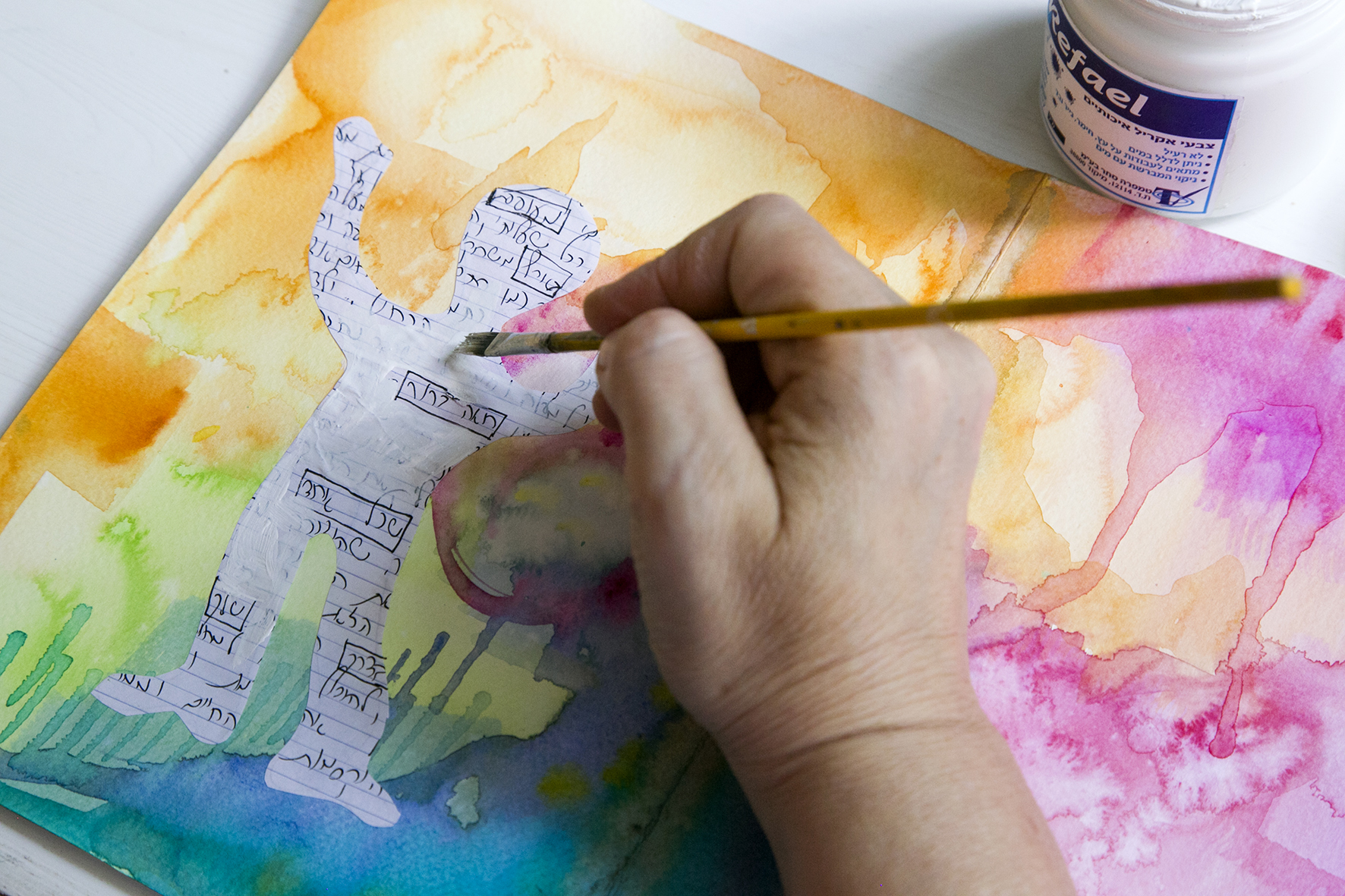
- Let images carry what words cannot. This is why I work in a visual journal rather than a written one. A torn paper, a smear of dark blue, a small figure in a large empty page, these can hold an experience at exactly the distance you can bear. The image says it without making you say it.
- Close the page deliberately. When the timer ends, end. Some women draw a border around what they made, some write one closing word, some physically close the journal and put both hands on the cover for a breath. The ritual matters: it tells your nervous system that the visit is over.
- Come back to the room. Name five things you can see, feel your feet, drink water, step outside. Give yourself ten ordinary minutes before returning to your day.
Why can images be gentler than words?
Words demand a story: first this, then that. A traumatic memory often is not stored as a story, it lives in fragments, sensations, colors. Asking it to become sentences too early can force you through the worst parts in order. An image lets the experience arrive whole but veiled, as a symbol that you control. I have watched this again and again in my SoulPages work: a page of color and torn paper says what happened without the woman having to say it, and the page holds it, so she does not have to hold it alone.
When should you bring this to a therapist instead?
Journaling alone is enough when the material is heavy but moves: you create, something shifts, you feel a little lighter or clearer afterward. Bring in a professional when it does not move, when the flooding signs above repeat, when sleep or daily functioning start to suffer, when there are thoughts of harming yourself, or when the trauma is recent and still raw. This is not a downgrade. A therapist does not replace your journal; the journal often becomes the bridge, and the pages you have made can travel with you into that room.
Frequently asked questions
Is it safe to journal about trauma without a therapist?
Often yes, if you pace yourself: time-limited sessions, working at the edges of the memory rather than the center, and a clear closing ritual. If journaling repeatedly leaves you flooded, numb, or worse than before, that material needs a professional alongside you.
Can journaling about trauma make you feel worse?
Temporarily, yes; touching pain stirs it. The difference to watch is direction: healthy sessions leave you a little emptier and clearer, while sessions that repeatedly end in panic, numbness, or spiraling mean you are reliving rather than processing.
Do I have to write about what happened?
No. You never have to retell the event. You can work with how the memory lives in you today, in colors, shapes, and single words, and let images carry the parts that language cannot hold yet.
What is the safest way to end a trauma journaling session?
End at the time you set, close the page with a deliberate gesture such as a border, a closing word, or simply shutting the journal with both hands, and then ground yourself in the room for a few minutes before returning to your day.
Is visual journaling better than written journaling for trauma?
For many women, yes, because images can hold an experience at a bearable distance without forcing it into a story. Written and visual journaling also combine well: a page of color and imagery first, then a few words if they come.
If you are reading this with a specific heaviness in mind, I want you to hear one thing: the fact that you are looking for a careful way in, instead of just diving, is already wisdom. Your pace is not a weakness. It is the method. If you would like a gentle, structured way to begin, my guide to keeping an art therapy journal walks you through the first pages, and the SoulPages courses at soul-pages.com go deeper whenever you are ready.
With love,
Rakefet
Recent Comments