

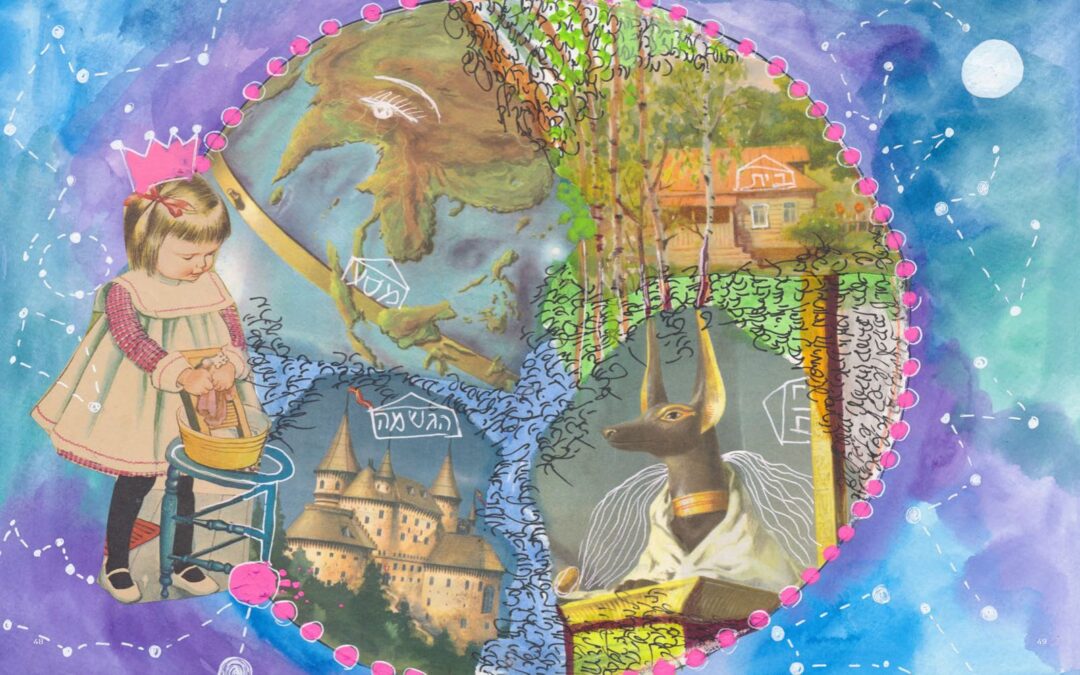
Art Journaling After Trauma: Working Through Resources Instead of Through the Pain
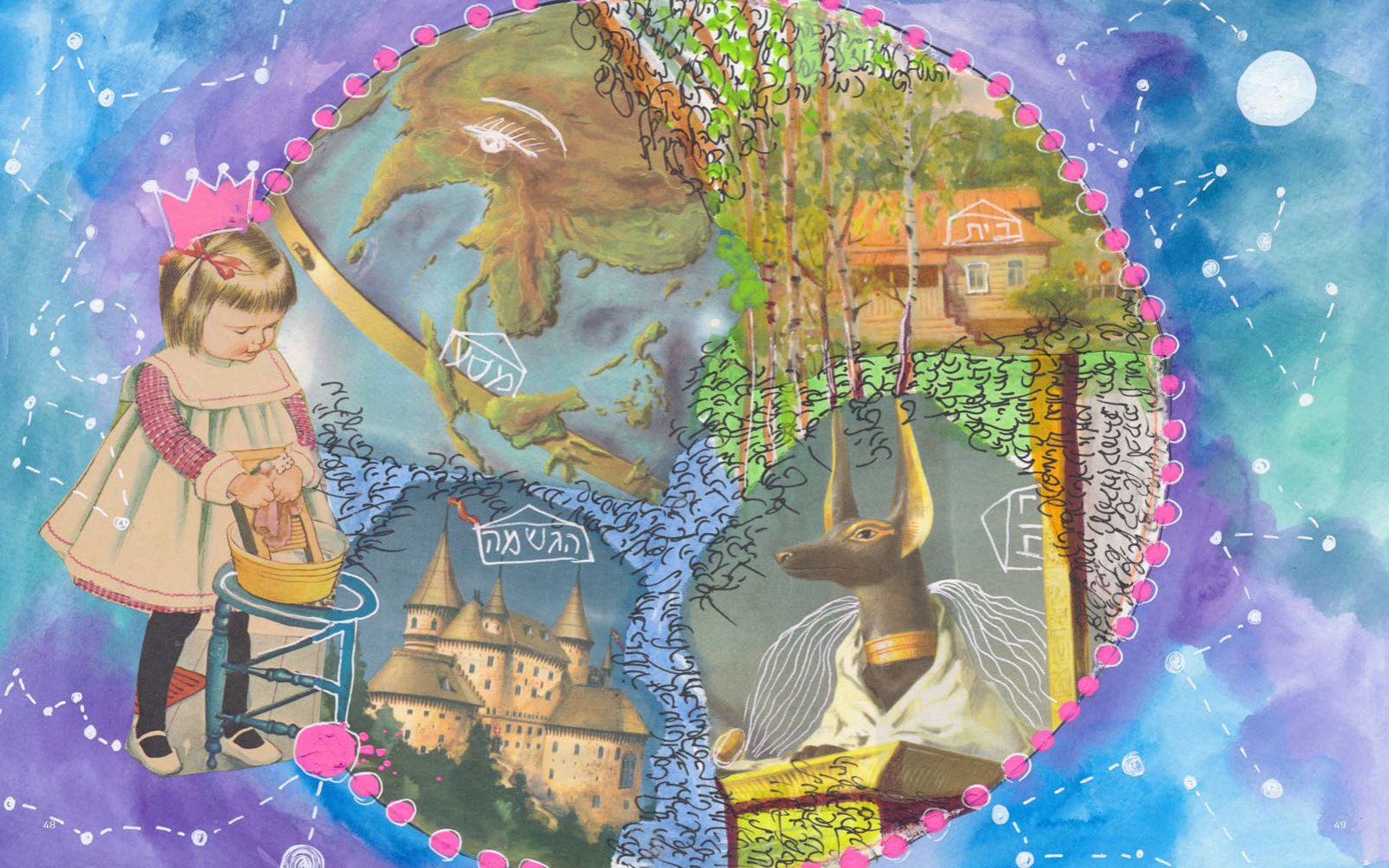
Art journaling after trauma works through resources, not through the difficult memory. Instead of asking a woman to tell you what happened to her, you build on the page a connection to the strengths she already holds: people she loves, places that feel like home, moments when she was braver than she believed. That ground thickens layer by layer, and only from there can the heavy material move at its own pace, if it moves at all.
I set this out in a paper published in May 2024 in Psychologia Ivrit (Hebrew Psychology), Israel’s main professional portal for psychologists and therapists, under my earlier name, Rakefet Link-Skop: “Bringing Back the Light”: The Visual Journal in the SoulPages Method as an Intervention for Hope and Resilience Resources. The paper documents group work with women evacuated from the communities around Gaza in the months after October 7th, and what follows is that paper in English, with a link to the original at the end. The rest of the publications and press are gathered on the publications page.
My name is Rakefet Hadar. I am an art therapist, an author, and the founder of the training school for SoulPages guides. Then October 7th came, and together with guides trained in my method I sat facing hundreds of evacuated and surviving women, with a blank page and a pencil in hand, and we asked ourselves the only real question there was: what do you do with pain that has no words?
How did the volunteer project begin?
In the first weeks after October 7th I contacted Merav Shaked, a SoulPages guide and an entrepreneur, and together we set up a volunteer network of guides who went into the hotels and the evacuation centres. We called the project Bringing Back the Light, and we meant it literally: not treating the trauma, but searching together for the points of light that remained and strengthening those.
Each group was given ten sessions, two to three hours each. I wrote the paper afterwards because I understood that something had happened there which other therapists deserved to know about.
Why not work on the trauma directly?
Because this is accompaniment rather than treatment. The women sitting opposite us were inside the event and not after it. They were still living in a hotel room without knowing when they would go home, and any request to tell the story would have pulled the memory close far too fast.
That distinction is the heart of the whole thing, and it is the line between processing and re-experiencing:
- Processing brings the pain closer at a pace the woman controls, and leaves her tired and a little lighter.
- Flooding puts the body back on alert, as though the event were happening again right now, and leaves her shaking and disconnected.
The trauma is in the room and everyone knows it is there, but it is not the door you come in through. The door is made of the woman’s own resources.
What are the seven elements of the SoulPages method?
The SoulPages method is a way of working in a visual journal in which every page is built in layers, following a fixed order of seven elements, so that what was split apart inside reconnects on paper.
- Intention. One word or one sentence you enter the page with. Not a subject to work on, but an intention.
- The magic of chance. Opening the page with a technique you cannot control, a print or a spatter, so that something nobody planned is already there, waiting.
- Background. The first layer, which gives the page its atmosphere before it holds any content at all.
- Colour. The page’s big emotional choice. Colour says the thing that does not have a name yet.
- Image. A cutting from a magazine, an old photograph, a simple drawing. The image holds the experience whole but covered.
- Line. What connects the parts, encircles them, or keeps them apart.
- Text. One word or one sentence, at the end and never at the start, once the page has already said its piece.
That order was built deliberately. It begins where there is no judgement, and reaches words only at the point where they are no longer required to explain anything.
What made a hotel room feel safe enough to work in?
Four things, described in the paper as the pillars of the intervention:
- The frame. A personal journal for each woman, one book that stays hers even when the house itself is an open question. When there are no walls, a sewn notebook is a place.
- Session content. Each meeting is built around a metaphorical image, the tree of resources for instance, and from there a gentle mapping of the parts of the psyche, including work with the inner child and with archetypes of strength.
- Extended time as community time. Two to three hours are not needed for the making alone. These are the hours in which women talk while their hands are busy, and community forms out of that conversation.
- The guide’s presence. The guide works beside them rather than in front of them, and part of her job is to notice the points of light and name them, including while the woman herself still cannot see them.
What happened to those groups afterwards?
What surprised me more than anything is that some of the groups carried on meeting by themselves once the ten sessions had ended. Women organised to make things together on days when no guide came, and the journal went on accompanying them through daily life inside the hotel.
That was the point of this tool from the start. Not a woman dependent on a guide, but a woman walking out with a notebook under her arm and knowing how to open it by herself, on the day that turns out to be hard.
Does this apply to people who have not been through something extreme?
It does, and the principles are identical. Any woman moving through a period she has no words for, grief or illness, divorce, separation, a change she never asked for, can work in exactly the same order: intention, an uncontrolled background, colour, image, line, and then one word.
The difference between working alone and working with a guide is not the technique but the question of who is holding the page with you. If flooding returns every time you open the journal, that is the signal to work with professional support rather than on your own.
Frequently asked questions
Does art journaling help after trauma?
It does, when it works through resources rather than through the difficult memory itself. Journaling that connects a woman to the strengths she already has builds resilience and a sense of capability, and lets the heavy material move at its own pace. Journaling that asks her to reconstruct the event can flood her instead.
What is the difference between creative accompaniment and psychological therapy?
Accompaniment in a visual journal works on resources, hope and a sense of capability, and does not treat the trauma itself. Psychological therapy and art therapy engage the traumatic material directly. They do not replace one another, and many women use both at the same time.
What are the seven elements in the SoulPages method?
Intention, the magic of chance, background, colour, image, line and text. Every page is built in layers in that order, so that words arrive last, after colour and image have already said the difficult part.
How long is a group visual journaling session?
Two to three hours. The extended time is not a luxury; it is what allows the crossing from inner work into making, and it is where the conversation between the women happens.
Do I need art experience to join a group like this?
No. Most of the women who came had not touched art materials since primary school. The techniques are built specifically so that no drawing ability is required, and the result comes from how the layers combine.
Where was the paper published and can I read it?
It was published on 23 May 2024 on Psychologia Ivrit (hebpsy.net), Israel’s professional portal for psychologists and therapists, under the name Rakefet Link-Skop. It is available there in Hebrew.
One of the women told me, after the third session, that those had been the two most meaningful hours she had spent in all those weeks. I had said nothing wise to her. I sat down beside her, suggested yellow, and she added it herself. Give yourself twenty minutes today, take a page, some watercolour, a few images, and make something that reflects exactly what you are feeling right now. If something heavy surfaces while you work, here is exactly what to do in that moment. And there is a free lesson waiting when you join the list: soul-pages.com
Read the full professional paper: Rakefet Link-Skop, “Bringing Back the Light”: The Visual Journal in the SoulPages Method as an Intervention for Hope and Resilience Resources, Psychologia Ivrit, May 2024 (Hebrew)
With love, Rakefet
Recent Comments