Publications and Press

Publications and Press

Publications and Press
The SoulPages method is not an idea that came out of a workshop. It has been published in two peer-reviewed professional journals and in two professional books, taught as a certified facilitator training since 2016, used in a large-scale intervention with women displaced by war, and shown in a New York gallery. This page gathers what I have published and where the work has been presented.

My name is Rakefet Hadar. I am an art therapist, an author, and the founder of the training school for SoulPages guides. I hold a BA and an MA in Design from Buckinghamshire in England, and an MA in Art Therapy from Lesley College in Massachusetts. My academic papers were published under my earlier name, Rakefet Link-Skop, so if you come across that name in a database or a search result, it is the same person and the same method.
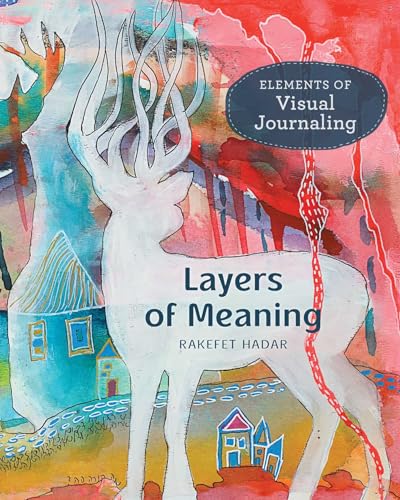
Layers of Meaning: Elements of Visual Journaling, book cover
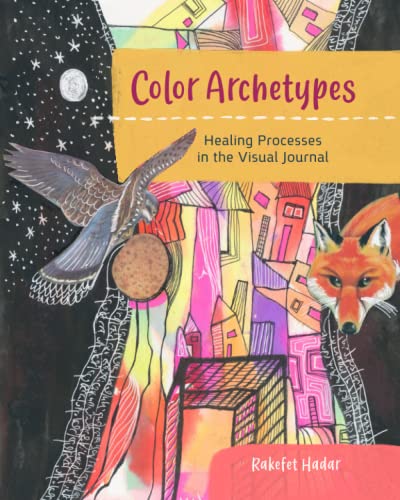
Color Archetypes: Healing Processes in the Visual Journal, book cover
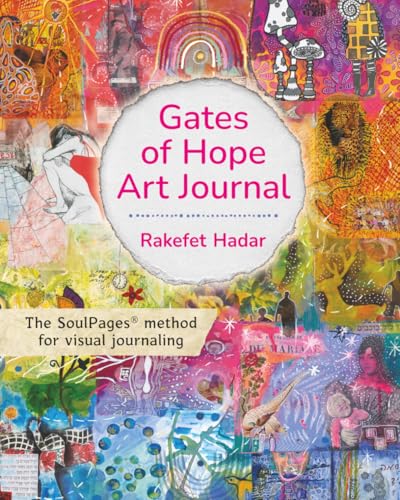
Gates of Hope Art Journal, book cover
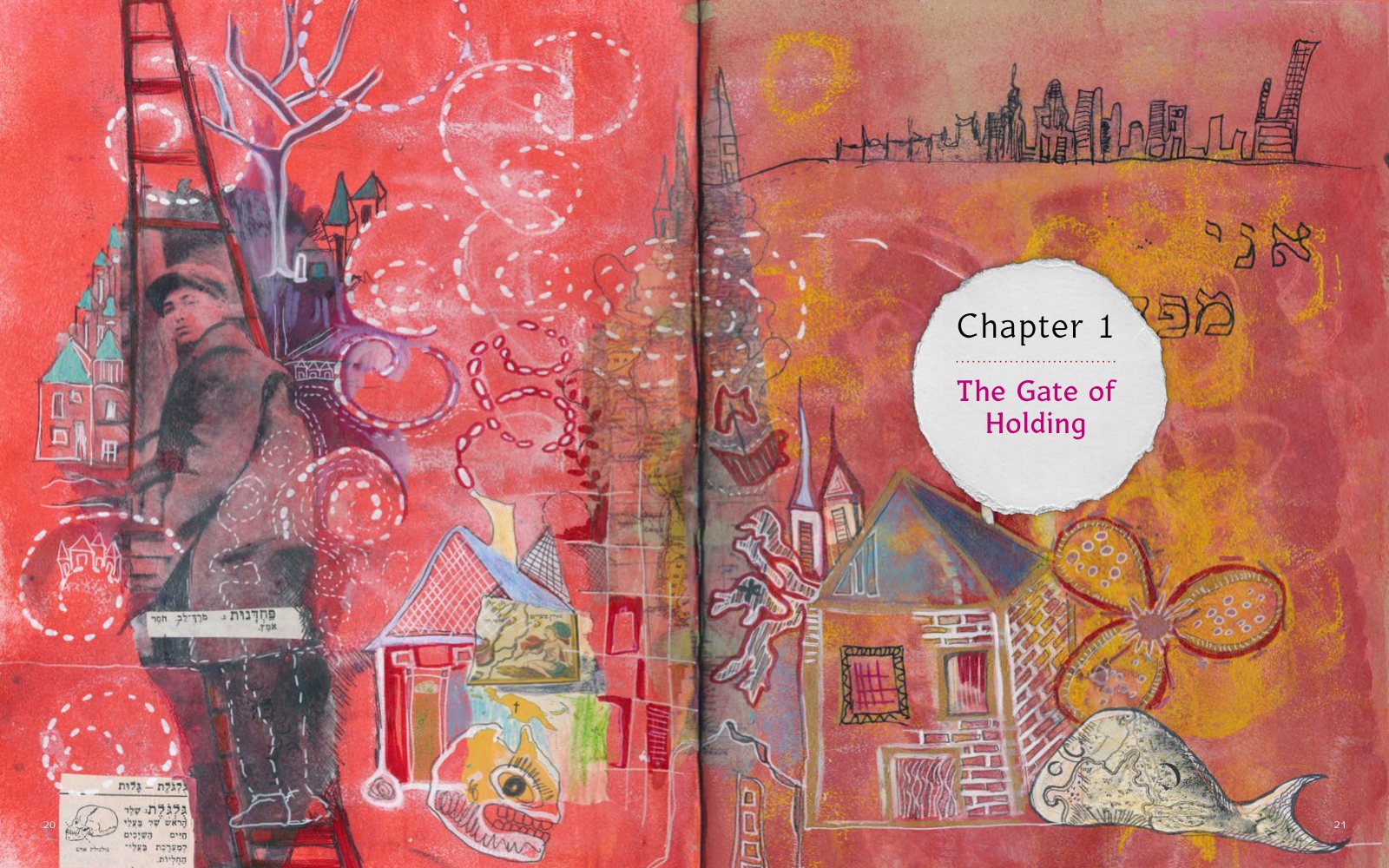
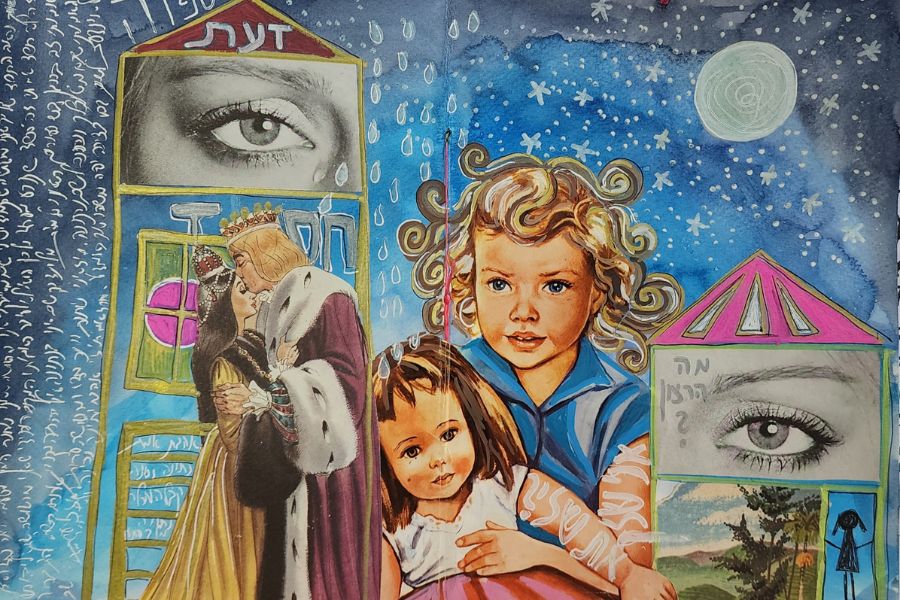
A spread from Gates of Hope Art Journal

What professional papers have been published on the SoulPages method?

Two peer-reviewed papers setting out the method and the theory beneath it, and two chapters in professional books, one from an academic press and one from a national arts therapies association. Each one has a full summary in English on this site.

Internal Journey Journaling: The Visual Journal as a Therapeutic Tool

Bein HaMilim (Between the Words), issue 11, the journal of Kibbutzim College of Education, 2016. The paper that laid the foundations: the five principles of working in a visual journal inside a therapeutic relationship, a mapping of Winnicott’s four stages in the development of play onto the stages of therapy, and the line that runs from Jung’s Red Book to the notebook of today. It closes with a full case study of a mother I worked with for three years in a mothers’ group. At that point the method was still called Internal Journey Journaling; the name SoulPages came in the years that followed.

Read the full summary in English

“Bringing Back the Light”: The Visual Journal in the SoulPages Method as an Intervention for Hope and Resilience Resources

Psychologia Ivrit (Hebrew Psychology), May 2024. A professional account of group work with women displaced from their homes by war: the seven elements of the method, the four pillars of the intervention, and the clinical reasoning behind working through a woman’s own resources rather than through the difficult memory itself.

Read the full summary in English

“Bridges to Myself”: Easing Tension, Discovering Resources and Connecting to Hope Through the Seven Elements and the Visual Journal

A chapter in Protocols of Strength and Hope: A Guide to Facilitating Arts-Based Workshops for Building Resilience in Collective Crisis and War, initiated and edited by Dr Ronen Berger, published by Ono Academic College in partnership with the Community Stress Prevention Center, 2024. The book gathers 33 detailed workshop protocols written by arts therapists working through a period of war, and was released free online.

My chapter is protocol 32. It sets out a complete process for making one page in a visual journal following the seven elements of the SoulPages method: structured step-by-step facilitation, an equipment list, and an audience of ten years old and up. It was written specifically to work with people who do not enjoy making art or are certain they cannot.

Read the full protocol in English

“When Words Hurt and Heal”: Visual Journaling with Displaced Women

A chapter in Safe Studio, an Anthology: Creative Texts in the Wake of War, published by YAHAT, the Creative and Expressive Arts Therapies Association, October 2024. Editors: Dr Tamar Kichli-Borochovsky, Nona Orbach and Chen Jakobi. It is the association’s first anthology, a collection of personal and creative testimonies from the arts therapists who set up some fifty Safe Studios for displaced families. My chapter opens the section called Gathering Materials.

It is not a protocol but a testimony. It describes the open hotel lobby that turned into a studio, the journals volunteers had hand-sewn in advance, and the suitcase we kept the materials in, which became a transitional object for the group in its own right.

Read the full summary in English

Where else is the method cited and applied by others?

In Connecting to Strengths and Hope, Through Creation: Theory and Protocol, by Dr Ronen Berger, Vered Rahat and Liat Schwartzman, advised by Prof. Mooli Lahad, published by the Community Stress Prevention Center, second edition October 2024. It is a resilience programme for teenagers, running in the centre’s resilience units since March 2024.

The protocol I wrote is the basis for two of its workshops, and is credited to me by name in both:

  • Protocol 5, “Bridges to Myself, visual journal”, based on my protocol and extended to work with three-dimensional materials.
  • Protocol 18, “Visual journal, bridges to a better future”, adapting the same principles towards connecting to hope and imagining a new reality.

Layers of Meaning is also cited there as further reading on the visual journal in work with loss.

The method also travels through creators who name it in their own work. In September 2026 Tracey Young published Inner Journey to the Upper Worlds, crediting the SoulPages method and linking back to this site.

What books have I written?

  • Layers of Meaning, book cover
    Layers of Meaning: Elements of Visual Journaling, 2019, published by Stackpole Books. The first publication to bring every element of the SoulPages method together in one place, and a creative course in its own right. It appears as a bibliographic source in my 2024 paper. The book page · On Amazon.
  • Color Archetypes, book cover
    Color Archetypes: Healing Processes in the Visual Journal, 2023. The book that sets out the color language of the method. Each color is read as an archetype, an inner figure with a voice and a role in the process, rather than as an aesthetic choice. It is the foundation of the Color Archetypes facilitator training. The book page · On Amazon.
  • Gates of Hope Art Journal, book cover
    Gates of Hope Art Journal: The SoulPages Method for Visual Journaling, November 2025. An art book that grew out of nine months of work with a group of women who survived the massacre at Kibbutz Be’eri. Each gate introduces one of the women, her personal journey, and the journal pages she made on her way towards recovery, alongside journaling exercises to work with. The book page · On Amazon.

Where has the work been interviewed and presented?

What can you watch on video?

Filmed documentation of the exhibitions, of the Bringing Back the Light project and of the book, together with a recorded interview. Most of these live on my YouTube channel.
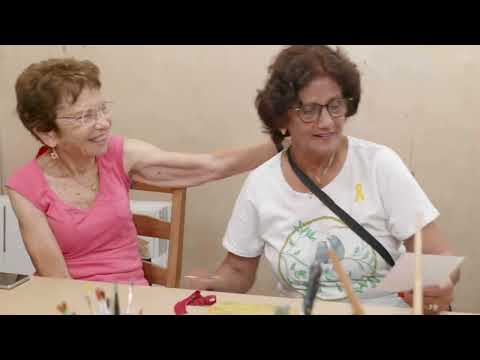
  • Be'eri Visual Journal ExhibitionBe’eri Visual Journal ExhibitionJuly 2025 · 1:32
  • Gates of Hope: The ProjectGates of Hope: The ProjectMarch 2025 · 1:39
  • Bring Back The Light ProjectBring Back The Light ProjectApril 2024 · 3:55
  • The Inspiration Place, Episode 193: Creating an Art Certification ProgramThe Inspiration Place, Episode 193: Creating an Art Certification ProgramMay 2022 · 23:41A filmed interview with Miriam Schulman on building a professional training in the SoulPages method.

What was the Bringing Back the Light project?

A volunteer network I set up with Merav Shaked to bring visual journaling into the hotels and the centres where displaced families were living. The figures, as they appear on the project page:

  • More than 60 guides and professional facilitators trained in the SoulPages method volunteered on it.
  • Around 30 centres were opened.
  • Dozens of additional volunteers hand-sewed personal journals for the participants.
  • Teams of two to four guides arrived at each session with a personal kit for every woman there.

Out of that project came a long stretch of work with a group of women from Kibbutz Be’eri, who made work in a visual journal over nine months, and from that work came an exhibition and a book.

The exhibition was shown at David Benrimon Fine Art in New York from 24 July to 7 August 2025: Bringing Back the Light: The Visual Journals of the Women of Kibbutz Be’eri.

The Be’eri survivors’ SoulPages exhibition

Frequently asked questions

Is the SoulPages method professionally recognised?
It has been published in two peer-reviewed professional journals, Bein HaMilim of Kibbutzim College of Education in 2016 and Psychologia Ivrit in 2024, and chapters on it appear in Protocols of Strength and Hope, published by Ono Academic College, and in the Safe Studio anthology published by YAHAT, the Creative and Expressive Arts Therapies Association, both in 2024. It has been taught as a facilitator training since 2016. It is not a substitute for psychological therapy and does not claim to be one.

Who wrote the papers, Rakefet Hadar or Rakefet Link-Skop?
The same person. Both academic papers were published under the name Rakefet Link-Skop, and the name I work and publish under today is Rakefet Hadar.

Where can I read this work in English?
A full summary of every paper and chapter is published here on this site and linked from each entry above. The original papers were published in Hebrew; the summaries carry the method, the reasoning and the findings in full.

What is the difference between Internal Journey Journaling and the SoulPages method?
They are two names for the same method. Internal Journey Journaling is the name it appeared under in the 2016 paper, and SoulPages is the name it has carried since.

May I cite this work, or invite Rakefet to speak?
Yes to both. For academic citation, reference the two original journal papers by title, journal and year as listed above. For talks, workshops or collaborations, get in touch through this site.

This work is still going. If you came here to find out whether there is something real behind the method, the answer sits in the papers, in the books and in the exhibition. And if you came here to begin something of your own, start here, and there is a free lesson waiting when you join the list: soul-pages.com
What Do You Do With a Page After You Make It?

What Do You Do With a Page After You Make It?

What Do You Do With a Page After You Make It?

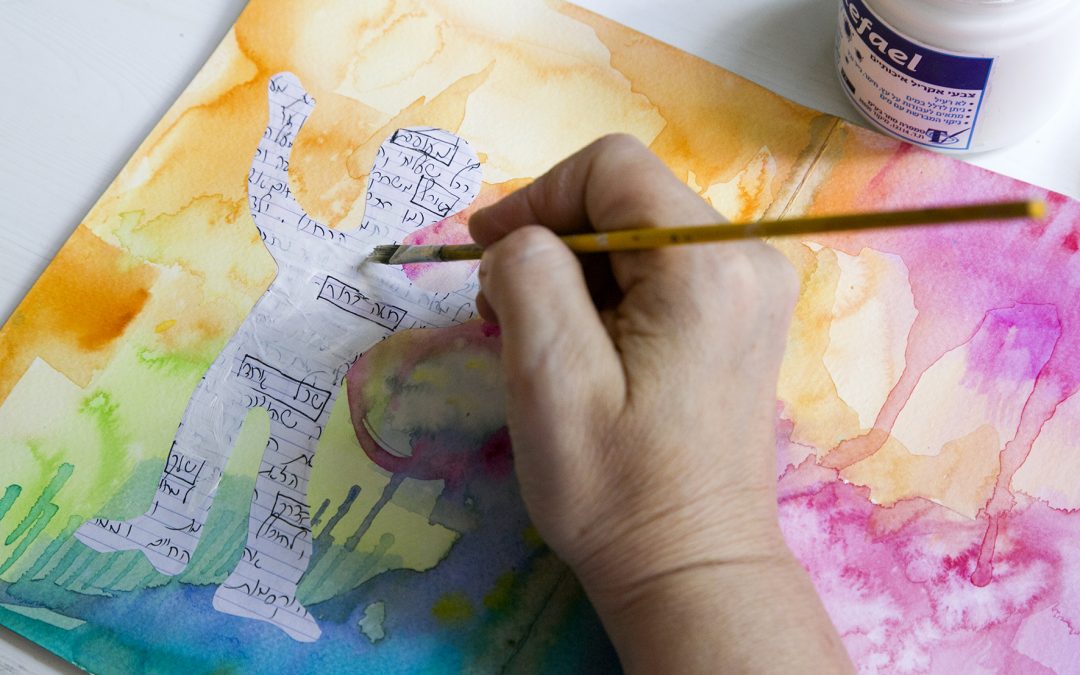
You witness it. Once a page is finished, set it upright, sit with it for a full minute without touching it, and let it look back at you. Then ask it three questions rather than explain it: what do I see, what surprises me, what does this page need from me now. Date it, close the journal, and leave the meaning to arrive in its own time.

My name is Rakefet Hadar. I am an art therapist, an author, and the founder of a school that trains facilitators in the SoulPages method of visual journaling. Almost everything written about art journaling stops at the moment the glue dries. That is strange to me, because in my own practice the page only becomes useful after it is finished. I made my first journal page in 2014, the year my mother was dying of cancer, and I remember sitting in front of it afterward with no idea what to do next. This is the part nobody taught me, so I will teach it to you.

Why is finishing the page only half the practice?

Making the page moves something. Witnessing the page is what lets you know what moved. While you are working you are inside the process, choosing colors, tearing paper, following an impulse, and you cannot see the whole while you are making it. The moment you step back, the page becomes an object outside of you, and for the first time you can meet it rather than be it. That shift, from maker to witness, is where the insight lives.

This is also the difference between art journaling as a craft and art journaling as inner work. A craft practice ends when the page looks right. An inner practice ends when the page has been seen.

How do you witness your own page, step by step?

  1. Set it up where you can see it. Prop the journal upright, lean it against a wall, put it on the floor and step back. Distance matters; a page held in your lap is still an extension of your hands.
  2. Stay for sixty seconds without touching anything. Do not fix, do not add, do not photograph. The urge to improve it is the fastest way to stop looking at it.
  3. Describe before you interpret. Say out loud, or write in the margin, only what is literally there: a large dark shape on the left, a small figure near the bottom edge, three strips of torn red paper. Description keeps you honest. Interpretation too early becomes a story you already knew.
  4. Notice what surprises you. There is almost always one element you did not plan: a color you never use, an empty corner you left alone, something placed off-center. Surprise is the page’s own contribution, and it is usually the most important thing on it.
  5. Ask what it needs, not what it means. More space, a second page, a word, a border, or simply to be left alone. The page often asks for something concrete before it offers anything abstract.
  6. Date it and close the journal. Write the date in a corner. Then close the book. Closing is a real gesture, not housekeeping; it tells your system that the visit is over.

What questions do you ask a finished page?

Keep the list short and use the same questions each time, so that over months you can hear how the answers change:

  • What do I actually see here, before I explain anything?
  • What is the first thing my eye goes to, and what did I almost miss?
  • What surprises me?
  • Where is the energy on this page, and where is it empty?
  • If this page could say one sentence to me, what would it be?
  • What does it need from me now?

Write the answers somewhere: the back of the page, a margin, a note on your phone. Six months from now the answers will be more useful than the page.

Why shouldn’t you interpret a page too quickly?

Because interpretation closes what the image opened. An image works precisely because it holds more than one meaning at once, and the moment you name it (“this is my anxiety”) you trade all of that richness for a label you already had words for. Nothing new can arrive after that.

This is also why, in SoulPages groups, we never interpret another woman’s page. A facilitator trained in the method creates alongside the participant rather than standing outside as an interpreter, and when a page is shared, the group witnesses it and reflects what they see, not what they think it means. Having your page received without being decoded is, for many women, the first time that has ever happened to them.

The same courtesy applies to your own pages. Witness first. Meaning, if it wants to come, will come.

What do you physically do with the pages?

The question What works What to avoid
Keep or throw away? Keep everything, even the pages you dislike Tearing out a page in the mood that made it
Show anyone? Only if you want to, and only to someone who will not interpret it Posting it for approval before you have witnessed it yourself
Where to store? One bound journal, in order, dated Loose sheets in a drawer, undated
Come back to it? Revisit in batches every few months Re-reading anxiously the next morning
Photograph it? After the witnessing, if you want a record During, as a substitute for looking

The pages you want to throw away are the ones worth keeping most often. A page that embarrasses you is usually a page that got close to something.

When should you go back and look at old pages?

Every few months, and always in batches rather than one at a time. Lay out ten or twenty pages together and look for what repeats: a color that keeps returning, a shape you draw without deciding to, an edge you never cross. A single page shows you a day. A stack shows you a pattern, and the pattern is the thing you cannot see from the inside of your own life.

Choose a calm moment for this, not a low one. And if a page brings back something heavy that does not settle, close the journal and read my guide on journaling about trauma safely, which covers pacing, closing rituals, and when to bring this work to a therapist.

Frequently asked questions

What do you do with art journal pages after you finish them?

Witness them. Prop the page up, look at it for a minute without touching it, describe what is literally there, notice what surprises you, ask what it needs, then date it and close the journal.

Should I analyze or interpret my art journal pages?

Describe first, interpret rarely. Naming a page (“this is my grief”) closes the image down to a label you already had. Witnessing keeps it open, and any meaning that matters usually arrives later on its own.

Should I keep art journal pages I don’t like?

Yes. Pages that embarrass you are often the ones that got closest to something real, and you cannot judge that in the mood that made them. Keep everything, dated and in order.

How often should I look back at old journal pages?

Every few months, and in batches of ten or twenty at once. A single page shows you one day; a stack reveals the repeating colors, shapes, and edges that are invisible from inside your own life.

Is it okay to share my art journal pages with other people?

Only by choice, and best with someone who will witness rather than interpret. In SoulPages groups we reflect what we see on another woman’s page, never what we think it means.

What if I look at the page and feel nothing?

That is a legitimate result, not a failure. Write “nothing today” next to the date and move on. Pages frequently open months later, and a blank response now says more about timing than about the page.

There is a particular quiet that happens in a room full of women when the making stops and the looking begins. The noise of scissors and water jars fades, someone props her page against a chair, and she goes still… that stillness is the actual practice, and it is the part almost nobody is taught. Give yourself twenty minutes to make a page this week, and then give yourself one more minute, just one, to sit with it before you close the book. If you want a structured way in, my guide to keeping an art therapy journal walks through the first pages, and the SoulPages courses at soul-pages.com go further whenever you are ready.

With love,
Rakefet

Is It Safe to Journal About Trauma? What an Art Therapist Wants You to Know

Is It Safe to Journal About Trauma? What an Art Therapist Wants You to Know

Is It Safe to Journal About Trauma? What an Art Therapist Wants You to Know

Yes, journaling about trauma can be safe and deeply healing, but not unconditionally. Safety comes from connecting to your strengths and resources first, approaching the memory only in small, chosen doses, keeping one foot in the present, and knowing how to close the page when you are done. Diving straight into your rawest memory, alone and unprepared, can overwhelm you instead of helping you.

Almost every article about journaling and trauma says the same two things: “journaling helps” and “this is not a substitute for therapy.” Both are true. But nobody tells you the part in between, the part you actually need on a Tuesday night when the notebook is open and your heart is racing. I want to give you that part. I am a trained art therapist, the creator of the SoulPages method of visual journaling, and since October 7th I have sat with hundreds of women survivors in Israel, holding a blank page together with a pain that had no words. This is what I have learned about doing this work safely.

Can journaling about trauma make things worse?

It can, if it turns into reliving instead of processing. Writing or creating about a traumatic memory brings it close, and if it comes too close too fast, your nervous system can respond as if the event is happening again: racing heart, numbness, fog, panic. That state is not healing, it is flooding. The practice below exists to keep you on the healing side of that line, where you touch the memory and stay yourself while you do it.

How does the SoulPages method approach trauma?

Not head-on. In SoulPages we never go to the trauma directly unless you brought that material yourself and you are ready to work with it. The trauma is there, we know it exists, and it is not the door we walk through. Every session begins by connecting to the strong, good parts of you and to your resources: people you love, parents and family, including the ones who are no longer alive, places that held you, moments you were braver than you knew. There are many, many ways to connect to strengths and resources on a page, and this is the unique heart of the method: the stronger that ground becomes, the more the hard material can soften and move at its own pace.

Community is a resource too, and a very significant one. Creating alongside other women, in a group or with a trained facilitator, means your page is witnessed and held, and what one woman dares to put on paper opens a door for all the others.

What are the signs you should pause?

Stop and step away from the page, gently and without any sense of failure, if you notice:

  • Your body switching to alarm: pounding heart, shallow breath, trembling, nausea.
  • Going blank or foggy, feeling far away from the room, losing track of time.
  • The writing pulling you into the memory in loops, the same scene replaying without relief.
  • Feeling worse after journaling, again and again, rather than emptier and lighter.

One hard session is not a red flag; it happens. The same overwhelm returning every time you open the journal is your signal that this material needs professional company, not more solo effort.

How do you journal about trauma safely, step by step?

  1. Set a container before you start. Decide how long you will work, twenty minutes is plenty, and set a timer. Choose a stopping point before you begin, the way a swimmer checks where the ladder is before entering the pool.
  2. Make a resource page first. Before you go anywhere near the hard material, fill a page with what steadies you: a color you love, an image of a safe place, words of someone who loves you. This page stays in the journal. It is the place you return to. In the SoulPages method this is not a warm-up before the real work; it is the heart of the work.
  3. Work at the edges, not the center. You do not have to write what happened. Start with where you are now: what the memory feels like in your body today, what color it would be, what it needs from you. The center can wait months. It can wait forever. Healing does not require a full retelling.
  4. Let images carry what words cannot. This is why I work in a visual journal rather than a written one. A torn paper, a smear of dark blue, a small figure in a large empty page, these can hold an experience at exactly the distance you can bear. The image says it without making you say it.
  5. Close the page deliberately. When the timer ends, end. Some women draw a border around what they made, some write one closing word, some physically close the journal and put both hands on the cover for a breath. The ritual matters: it tells your nervous system that the visit is over.
  6. Come back to the room. Name five things you can see, feel your feet, drink water, step outside. Give yourself ten ordinary minutes before returning to your day.

Why can images be gentler than words?

Words demand a story: first this, then that. A traumatic memory often is not stored as a story, it lives in fragments, sensations, colors. Asking it to become sentences too early can force you through the worst parts in order. An image lets the experience arrive whole but veiled, as a symbol that you control. I have watched this again and again in my SoulPages work: a page of color and torn paper says what happened without the woman having to say it, and the page holds it, so she does not have to hold it alone.

When should you bring this to a therapist instead?

Journaling alone is enough when the material is heavy but moves: you create, something shifts, you feel a little lighter or clearer afterward. Bring in a professional when it does not move, when the flooding signs above repeat, when sleep or daily functioning start to suffer, when there are thoughts of harming yourself, or when the trauma is recent and still raw. This is not a downgrade. A therapist does not replace your journal; the journal often becomes the bridge, and the pages you have made can travel with you into that room.

Frequently asked questions

Is it safe to journal about trauma without a therapist?
Often yes, if you pace yourself: time-limited sessions, working at the edges of the memory rather than the center, and a clear closing ritual. If journaling repeatedly leaves you flooded, numb, or worse than before, that material needs a professional alongside you.

Can journaling about trauma make you feel worse?
Temporarily, yes; touching pain stirs it. The difference to watch is direction: healthy sessions leave you a little emptier and clearer, while sessions that repeatedly end in panic, numbness, or spiraling mean you are reliving rather than processing.

Do I have to write about what happened?
No. You never have to retell the event. You can work with how the memory lives in you today, in colors, shapes, and single words, and let images carry the parts that language cannot hold yet.

What is the safest way to end a trauma journaling session?
End at the time you set, close the page with a deliberate gesture such as a border, a closing word, or simply shutting the journal with both hands, and then ground yourself in the room for a few minutes before returning to your day.

Is visual journaling better than written journaling for trauma?
For many women, yes, because images can hold an experience at a bearable distance without forcing it into a story. Written and visual journaling also combine well: a page of color and imagery first, then a few words if they come.

If you are reading this with a specific heaviness in mind, I want you to hear one thing: the fact that you are looking for a careful way in, instead of just diving, is already wisdom. Your pace is not a weakness. It is the method. If you would like a gentle, structured way to begin, my guide to keeping an art therapy journal walks you through the first pages, and the SoulPages courses at soul-pages.com go deeper whenever you are ready.

With love,
Rakefet

SoulPages Facilitator Training open event 26

SoulPages Facilitator Training open event 26

The SoulPages open Event offers, bonuses and presents

I’m so grateful that you joined me for our open evening.

Thank you for bringing your presence, curiosity, and willingness to enter the page with an open heart. During our time together, we touched the SoulPages method from the inside, through imagination, creativity, and the Inner Child.

If something in the evening touched you, opened a door, or made you feel a quiet inner yes, I warmly invite you to consider joining the SoulPages Facilitator Training.

This training is a five month journey of creativity, healing, professional growth, and deep personal transformation. It is for women who feel called not only to create for themselves, but also to learn how to hold meaningful creative spaces for others, in groups, workshops, private sessions, and international circles.

The training begins October 13, 2025, and meets on Tuesdays at 11 EST.

It is an intimate cohort, with live guidance, recordings available for another year,

a supportive Facebook group, direct connection with me, and a private meeting as part of the process.


Scroll down for the recording replay

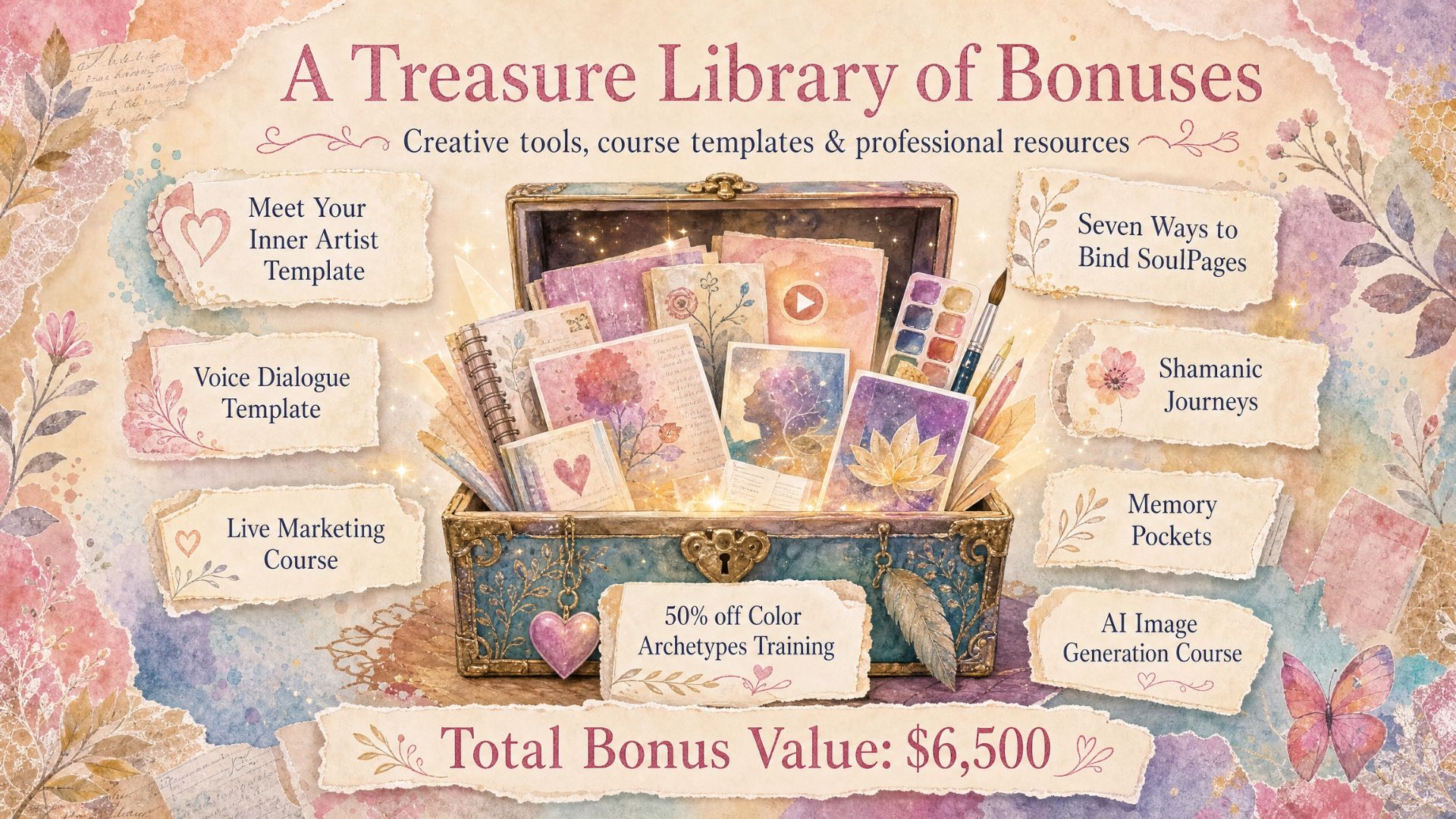
I also want to remind you of the beautiful bonus library that comes with the training.

 These bonuses were created to help you begin not only as a student of the method, but as someone who can gradually build real creative offerings in the world.

Total bonuses are worth is $6500!

  • “Meet Your Inner Artist” Full Course Template, including the license, structure, and materials to begin teaching this flagship course after graduation. Value: $1,500.
  • “Voice Dialogue” Technique Course Template, with materials to begin working with private clients and groups.
  • Live Marketing Course, to support you in finding your first students and launching your practice. worth $450
  • Seven Ways to Bind Your SoulPages Recorded Course. Value: $129.
  • Shamanic Journeys Course. Value: $100.
  • Memory Pockets Recorded Course, available immediately upon registration, so you can start creating right away. Value: $35
  • Ai Image Generation Course
  • %50 on the next Color Archetypes Training


The open Event replay

As promised, I’m sending you the recording of the evening, along with the image booklet gift, so you can return to the process, continue creating, and let the images keep opening new doors.

If you haven’t had a chance to watch the recording yet, I warmly recommend watching it here. It was a moving and meaningful evening, and I feel there is something in it that can still touch and inspire you, even if you are watching later in your own time.

The image booklet is waiting for you at the bottom of the same page where the recording is available. It appears as a link underneath the recording, and you can simply click it to download the booklet and use it whenever you wish to continue your visual journaling process.

If you have any questions about the training, feel free to email me or WhatsApp me. These are my contact details: +972543322464, Rakefetlink@gmail.com


    Resource for Visual Journaling

    Resource for Visual Journaling

    Resource for Visual Journaling

    🎨 The Visual Journaling Encyclopedia

    Ever wondered what gesso actually does? Curious about gel plate printing, image transfer, or eco printing? Not sure where to start with mixed media?

    I created this free encyclopedia just for you! It brings together dozens of visual journaling and mixed media techniques, all organized by topic, with a clear description of each one and direct links to tutorial videos on YouTube and Pinterest so you can watch, learn, and create right away.

    Inside you’ll find everything from different journal types and background techniques, to color and media, collage, lettering, special techniques like encaustic and resin, and even a whole section on inspiration, inner child work, and color as an emotional language.

    Whether you’re just starting out or you’re an experienced creator looking to explore new techniques, there’s something here for everyone. All in one place, with working links, and completely free.

    So what are you waiting for? Dive in and start creating! 🌸

    1