
Art Journal vs. Visual Journal: What’s the Difference?
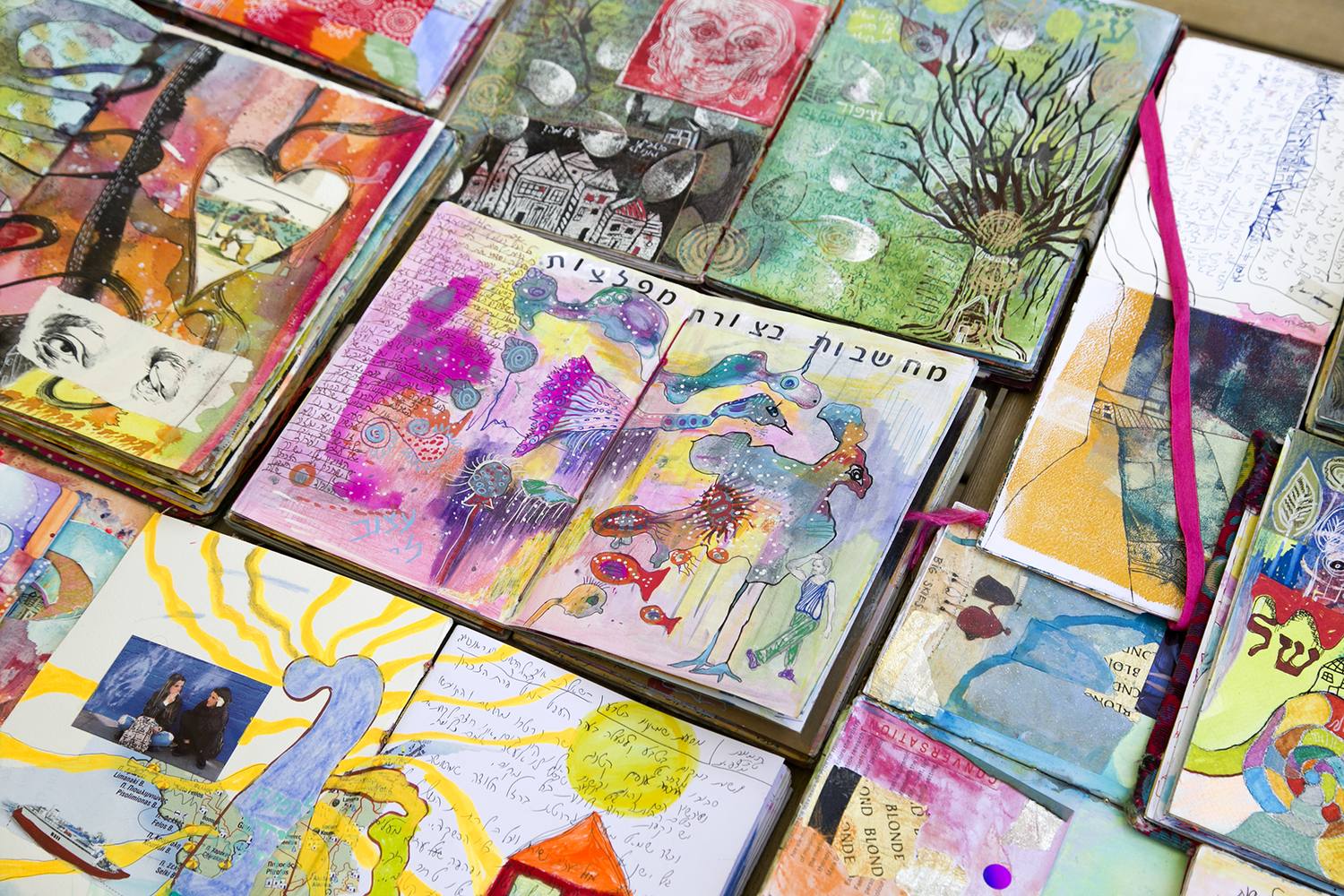
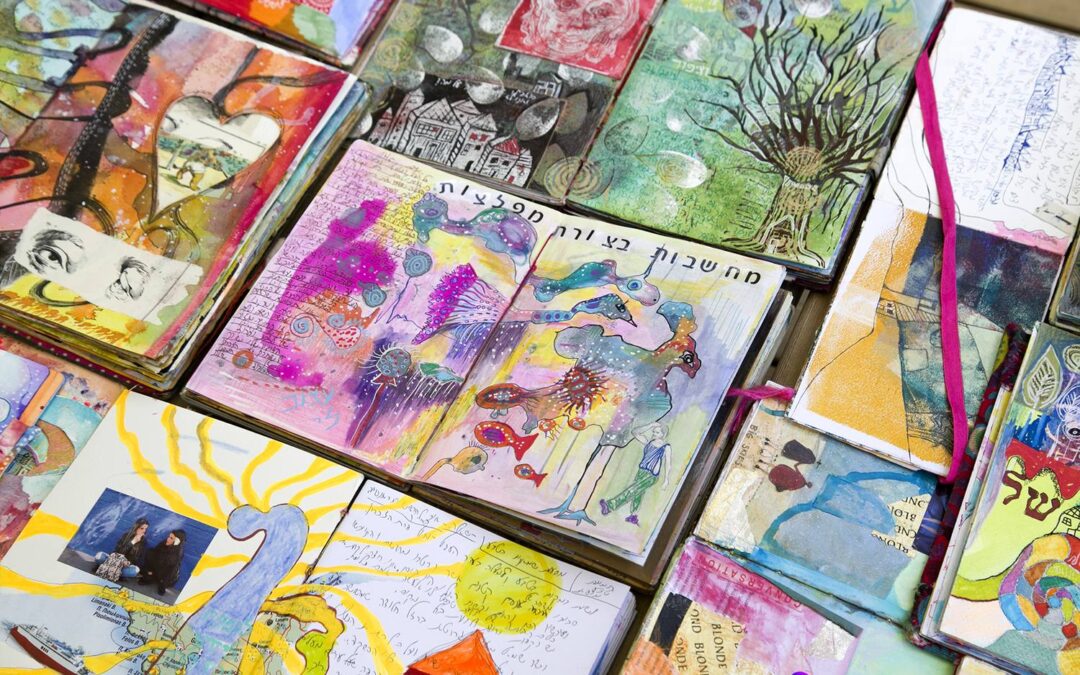
An art journal and a visual journal use the same paper, paint and glue. The difference is intent. In an art journal the page is made to be art: technique, experiment, visual play. In a visual journal the page is made to hold what you are living through, so images and color carry feelings before words do.
I am Rakefet Hadar, an art therapist, an author, and the founder of the school that trains SoulPages facilitators to guide creative work in a visual journal. I opened my first visual journal in 2014, the year my mother was dying of cancer. I was spending every day giving to my clients, and I needed one place where I could be the one receiving. I did not need that journal to be beautiful. I needed it to hold me. That is the whole distinction, and everything below grows out of it.
Why do people confuse art journals and visual journals?
Because there is no official definition, and the people who use the terms draw the line in different places. Some writers treat “visual journal” as the umbrella and “art journal” as one kind of it. Others use “art journal” for polished, finished-looking spreads and “visual journal” for a messier everything-book. Many use the two words interchangeably. Search for the difference and you will find forum threads that end without an answer.
The materials cannot settle it, because the materials are identical. What settles it is the question the page is trying to answer.
What is an art journal?
An art journal is a bound book where each page is an artwork in its own right: layers of paint, collage, stamps, drawing and lettering, made to explore technique and visual expression. The question behind the page is “what can I make?” Art journal pages are often shared, taught and admired, and a lot of the joy is in the making itself.
What is a visual journal?
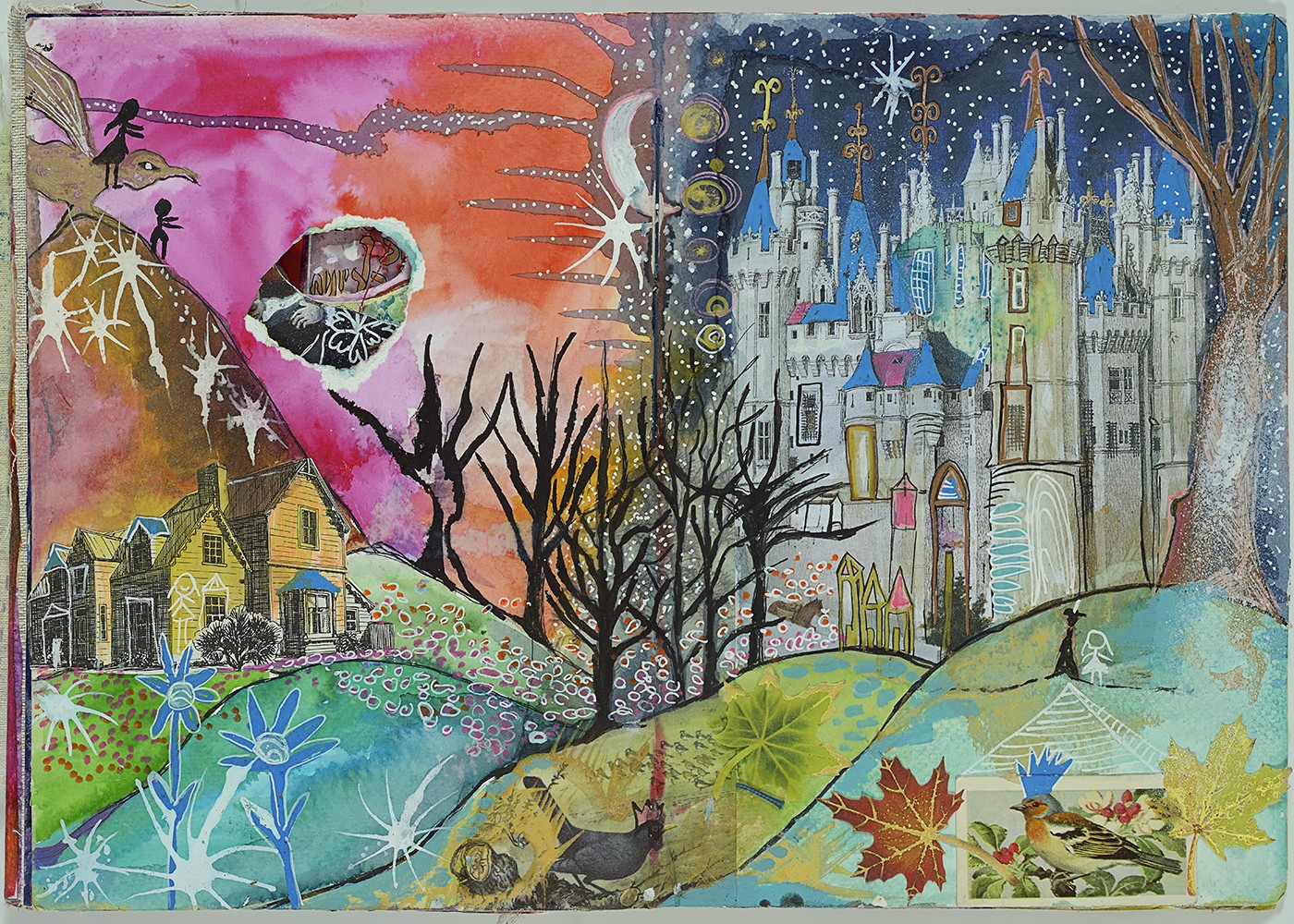
A visual journal is a journal in which images, color and collage do the reflective work that words do in a written diary. The question behind the page is “what am I living through?” A visual journal page may turn out beautiful, but beauty is a side effect, not the goal. It is usually private, and its value grows with time: one page is a moment, fifty pages are a map of a year.
Art journal vs. visual journal vs. the rest: a side-by-side
| Art journal | Visual journal | Sketchbook | Junk journal | Scrapbook | Bullet journal | |
|---|---|---|---|---|---|---|
| The question behind it | What can I make? | What am I living through? | How do I draw this? | What can I make from found paper? | How do I keep this memory? | What do I need to do? |
| Where the value sits | The finished spread | The inner record over time | Practice and observation | The handmade book itself | The preserved event | Organization |
| Who it is for | Often shared | Usually private | The artist | Often shared or gifted | Family, the future | You |
| Skill involved | Grows with technique | Not required | Drawing practice | Crafting | Arranging | None |
The last four are easy to tell apart. The first two are the ones that blur, which is why the question column matters more than the materials.
Can one journal be both?
Yes, and most real journals are. The same book can hold a page you made to try a new gel print technique and, the following week, a page you made because a phone call left you shaking. What changes is not the journal but your intent when you open it. Naming that intent before you begin, even with one word, is what turns art journaling into visual journaling.
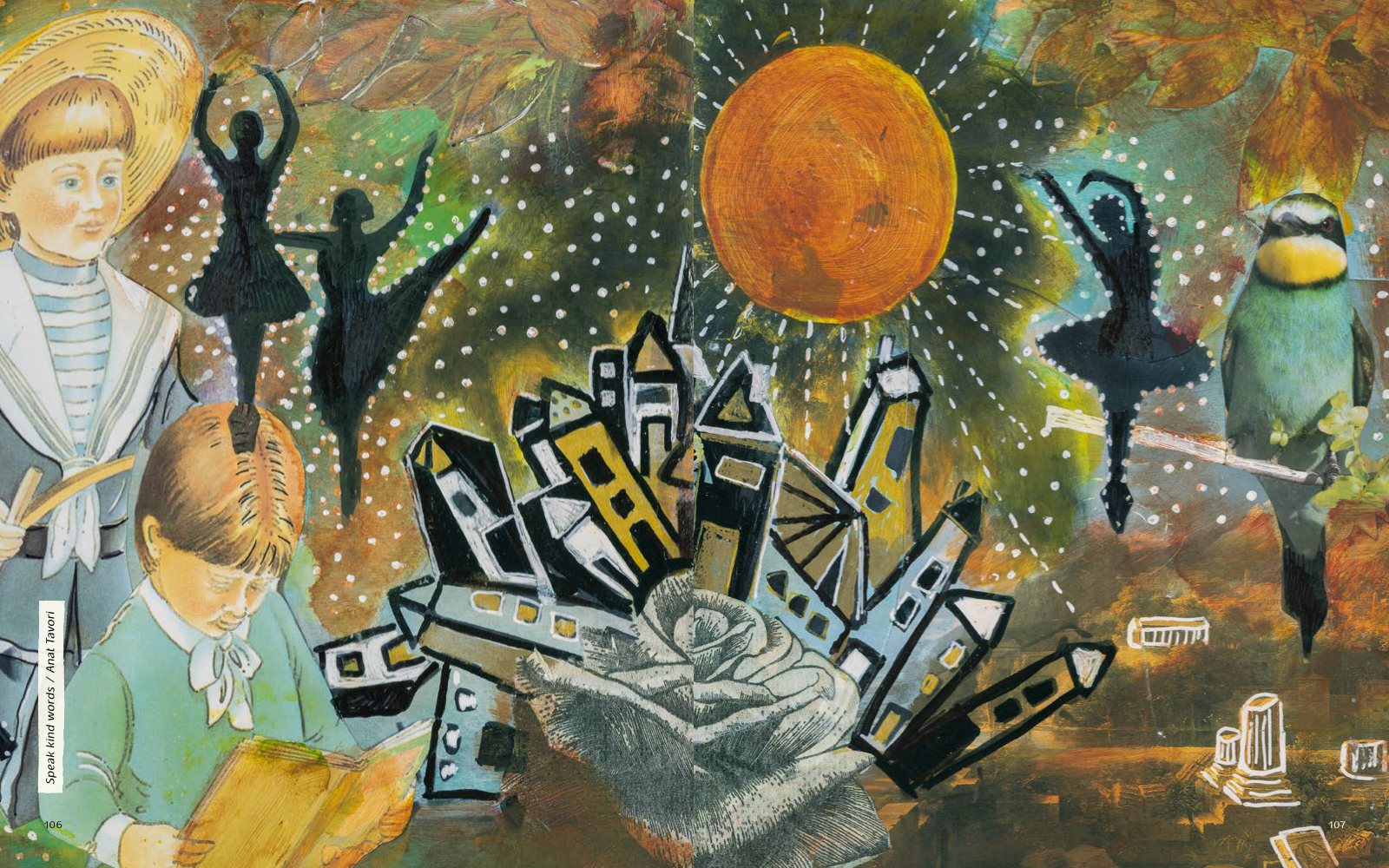
Where does SoulPages fit?
SoulPages is a method of working in a visual journal, built on seven elements: intention, the magic of chance, background, images, color, line and text. It brings together principles from art therapy, Jungian psychology and trauma-sensitive work inside that simple structure.
So SoulPages is not a third kind of notebook. It is a way of working in a visual journal, and it differs from open-ended visual journaling in three concrete ways:
- Every page starts from an intention, a question or a single word the page is dedicated to. Not a plan, just a direction.
- Every session begins with resources, the strong and good parts of you: people you love, places that held you, moments you were braver than you knew. Harder material is approached only from that ground, and only if you bring it yourself.
- The finished page is witnessed, not decoded. You first notice what the page does to you, then describe what is actually on it, then ask one open question. No symbol dictionary, no diagnosis.
Do you need to be able to draw for either one?
For an art journal, drawing skill helps, though many art journalers never draw at all. For a visual journal, it is irrelevant. You do not need to know how to draw. You need to let color and images meet the page and see what rises. A color wash, a torn magazine image and one word are a complete visual journal page.
Frequently asked questions
What is the difference between an art journal and a visual journal?
Intent. An art journal page is made to be art, exploring technique and visual expression. A visual journal page is made to hold what you are living through, with images and color carrying feelings before words do. The materials are the same.
Is a visual journal the same as an art journal?
Not quite, though the terms are often used interchangeably and there is no official definition. The clearest line is the question behind the page: an art journal asks what you can make, a visual journal asks what you are living through.
Is a sketchbook a visual journal?
Usually not. A sketchbook is for drawing practice and observation, and its pages are judged by how well the drawing works. A visual journal is for inner reflection, and its pages are not judged at all.
Do I need art skills to keep a visual journal?
No. Collage, color fields, torn paper and simple marks carry most of the expressive work, which is why people with no art background can start on the first evening.
What is SoulPages?
SoulPages is a method of working in a visual journal, built on seven elements: intention, the magic of chance, background, images, color, line and text. It combines principles from art therapy, Jungian psychology and trauma-sensitive work, and every session begins from your resources.
Can I use one journal for both art journaling and visual journaling?
Yes. Most journals hold both kinds of pages. What changes is your intent when you open the book, so it helps to name it before you begin, even with a single word.
Somewhere in your house there may already be a notebook you bought for “art” and never opened, because you were waiting to be good enough for it. That book does not need you to be good. It needs you to show up with whatever today was, a color, an image torn from a magazine, one word in the corner. Give yourself twenty minutes, take a page, some watercolor, a few images, and make something that reflects exactly what you feel right now. If you want a guided way in, my guide to keeping an art therapy journal walks you through the first pages, and if heavier material is part of your story, my article on whether it is safe to journal about trauma covers the safety side. The courses at soul-pages.com go further whenever you are ready.
With love,
Rakefet
Recent Comments