

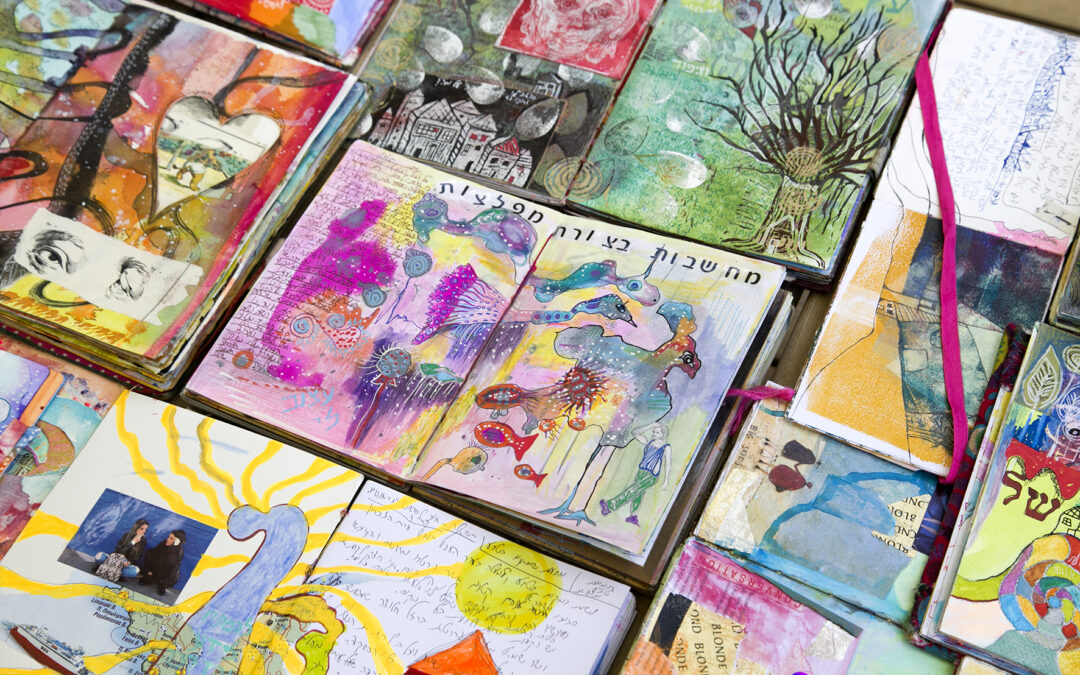
Art Journaling vs. Art Therapy vs. Therapeutic Art: Which One Do You Need?
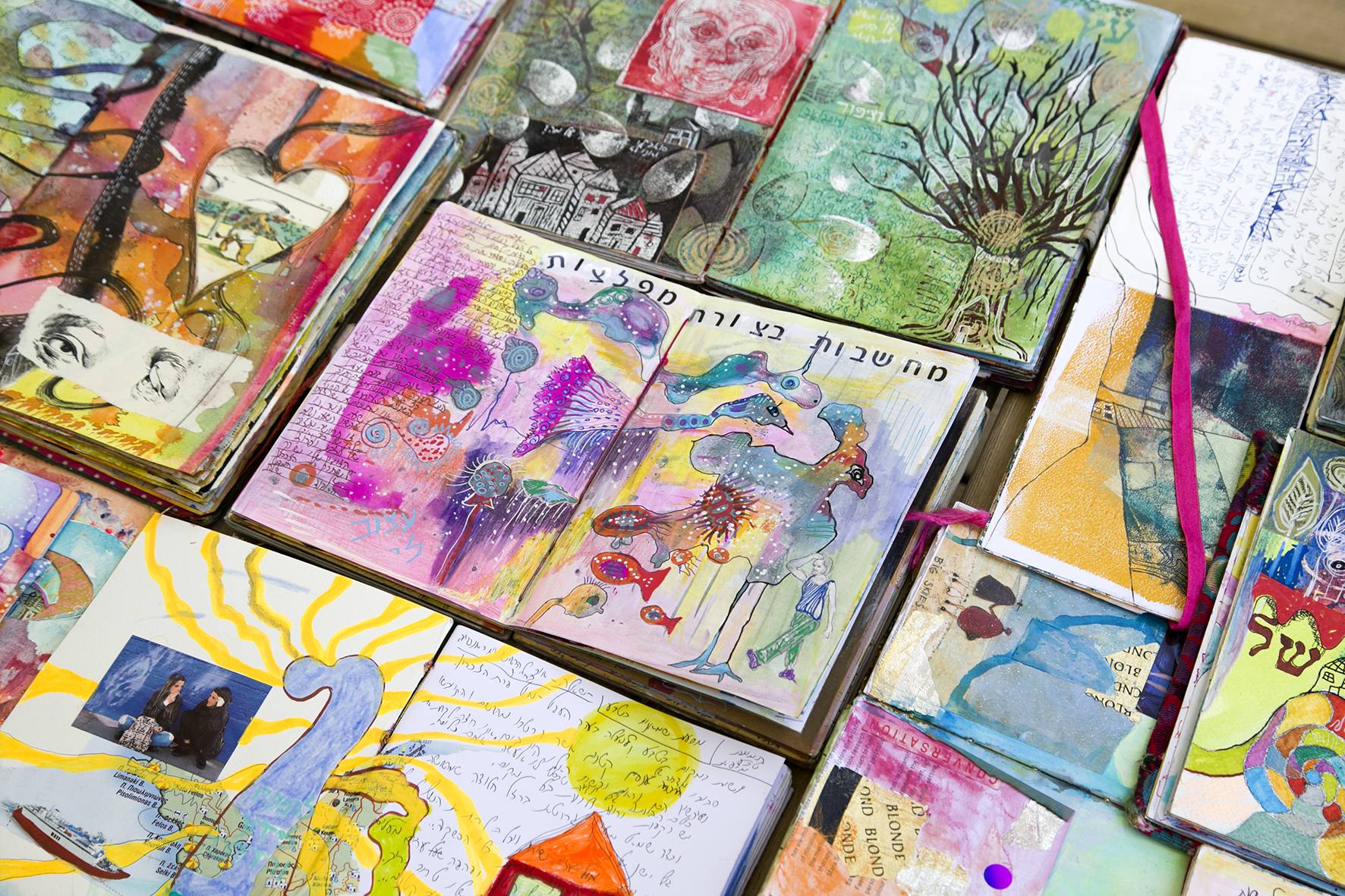
Art journaling is a self-directed practice you do on your own, at your own pace. Art therapy is clinical work delivered by a trained art therapist inside a therapeutic relationship. Therapeutic art sits between them: a guided creative experience with healing intent, led by a facilitator rather than a clinician. Choose by how much holding you need, not by how much you like making things.
I am Rakefet Hadar, an art therapist, an author, and the founder of the school that trains Way-Finders to guide creative work in a visual journal through the SoulPages method. I have sat on both sides of this question: in the clinic, where the work is treatment, and at a kitchen table with my own journal in 2014, the year my mother was dying of cancer and I was so depleted from giving to my clients that I needed somewhere to be the one receiving. Those two rooms are not the same room, and most articles blur them. Here is the honest map.
What is the difference between art journaling and art therapy?
The difference is not the materials, it is who holds the process and what it is responsible for. In art journaling you hold it. In art therapy a credentialed therapist holds it, and the work is accountable as treatment.
| Art journaling | Therapeutic art | Art therapy | |
|---|---|---|---|
| Who leads | You | A facilitator, teacher, or guide | A trained, credentialed art therapist |
| What it is for | Ongoing self-reflection and processing daily life | A guided experience: insight, expression, connection | Assessment and treatment of clinical distress |
| The pages | Yours, private, kept in your journal | Usually one piece made in a session | Clinical material, held and documented by the therapist |
| Interpretation | None. The page is witnessed, not decoded | Lightly reflected back, never diagnosed | Understood within a clinical framework |
| Where | Your own table, any hour | Workshop, group, course, retreat | A clinic or practice, in scheduled sessions |
| Safety net | Your own pacing and closing ritual | The facilitator’s structure and training | Clinical assessment, containment, and continuity of care |
| Cost and access | Nearly free to begin | A course or workshop fee | A professional fee; training and licensing requirements differ by country |
What is art journaling?
Art journaling is the practice of working in a visual journal over time, combining color, imagery, collage, line, and a few words to reflect what you are living through. Nobody assigns it, nobody grades it, and nobody needs to see it. Its power is accumulation: one page is a moment, fifty pages are a map of a year.
It asks nothing in terms of skill. You do not need to know how to draw. You need to let color and imagery meet the page and see what rises.
What is art therapy?
Art therapy is a clinical profession in which a trained art therapist uses image-making inside a therapeutic relationship to assess and treat psychological distress. The image is not the point; the relationship in which the image is made is the point. The therapist carries responsibility for safety, for pacing, for what happens when something opens too fast, and for continuity between sessions.
That is the real dividing line. A journal cannot notice that you have gone pale and quiet. A therapist can.
What is therapeutic art, and where does it fit?
Therapeutic art is guided creative work made with healing intent, led by someone who is not acting as your clinician: a workshop facilitator, a course teacher, a retreat guide. There is structure, there is a held space, there is often a group. What there is not is a clinical contract, a diagnosis, or treatment goals.
This middle category is where most group creative work actually lives, and naming it honestly matters. A weekend of making art in good company can be genuinely healing and still not be therapy, and a facilitator who calls it therapy is overstating what they are holding.
Where does the SoulPages method sit among the three?
SoulPages is a method of working in a visual journal in which every session begins by connecting to the strong, good parts of you and to your resources, and only from that ground does harder material get approached, if at all.
Practically, it spans two of the three columns above. Used alone with your own journal, it is art journaling with a trauma-sensitive structure. Used in a group with a trained Way-Finder, it is therapeutic art with a specific method behind it. It becomes art therapy only when the person holding the room is a therapist working clinically, which is exactly why the training school exists as a separate thing from the clinic.
One thing carries across all three uses: in this method we do not work with trauma head-on unless you brought that material yourself and you are ready to work with it. The trauma is there, we know it exists, and it is not the door we walk through. The door is resources: people you love, parents and family including those who are gone, places that held you, moments you were braver than you knew. Community is a resource too, and a significant one.
Which one do you need? A short decision path
- You want a regular place to process ordinary life, privately, at your own pace. Art journaling. Start tonight with a notebook and whatever paint is in the house.
- You want structure, teaching, and other women around you, and your material is manageable. Therapeutic art: a course, a group, a retreat.
- You are working with trauma, grief that has stopped moving, a diagnosis, or anything that affects sleep and daily functioning. Art therapy, with a credentialed therapist. Keep journaling alongside it if you want to.
- You journal already, and it keeps leaving you flooded, numb, or worse than before. That is not a signal to try harder alone. It is a signal to bring someone in.
- You want to guide this work for others. Then you need training, not just a practice, and you need to be clear in your own marketing about which of the three you are offering.
Can you do both at the same time?
Yes, and it is often the strongest combination. A journal gives you the six days between sessions. It catches what surfaces at 11pm, holds it until you can bring it somewhere, and gives you something concrete to bring: not “the week was hard” but a page of torn paper and dark blue that says what the week was.
Therapists rarely mind. Many welcome it. If you are in treatment, tell your therapist you keep a journal and ask how they would like you to use it; that conversation itself tends to be useful.
Frequently asked questions
Is art journaling the same as art therapy?
No. Art journaling is a self-directed creative practice you lead yourself, while art therapy is clinical treatment delivered by a trained art therapist within a therapeutic relationship. The materials can be identical; the responsibility for safety and pacing is not.
Can art journaling replace therapy?
No, though it can do real work alongside it. Journaling is enough when heavy material moves and you leave the page a little lighter. When the same overwhelm returns every time, or sleep and functioning are affected, that material needs a professional beside you.
What is therapeutic art?
Guided creative work made with healing intent and led by a facilitator, teacher, or guide rather than a clinician. It offers structure and a held space, but no diagnosis, treatment plan, or clinical contract.
Do I need to be able to draw for any of these?
No. None of the three depends on drawing skill. Collage, color fields, torn paper, and mark-making carry most of the expressive work, which is why people with no art background often go deepest fastest.
Can I bring my art journal into therapy?
Usually yes, and it often helps. Pages made between sessions give a therapist something concrete to work from and let you show what is hard to say. Ask your therapist how they would like to use them.
How do I know if I need art therapy rather than art journaling?
Watch the direction, not the intensity. If creating leaves you clearer or emptier in a good way, journaling is doing its job. If it repeatedly leaves you panicked, numb, or spiraling, if the trauma is recent, or if daily life is suffering, choose a credentialed therapist.
There is a moment I have seen in both rooms, and it looks exactly the same in each one: a woman puts down the brush, looks at what she made, and goes quiet in a way that means something moved. What differs is who is there to catch it. Choosing well is not about which practice is deeper, it is about being honest with yourself about how much holding you need right now. Give yourself twenty minutes, take a page, some watercolor, a few images, and make something that reflects exactly what you feel today. If you want a structured way in, my guide to keeping an art therapy journal walks you through the first pages, my article on whether it is safe to journal about trauma covers the safety side in depth, and the courses at soul-pages.com go further whenever you are ready.
With love,
Rakefet
Recent Comments